FlemingClans.com

"The Fleming Clan of Scotland: a genealogical history" - coming in late 2026!
Person Page 625
Archibald Fleming, of Catgill, afterwards 1st Baronet of Ferme
b. circa 1599, d. before 2 August 1662
Person Exhibits
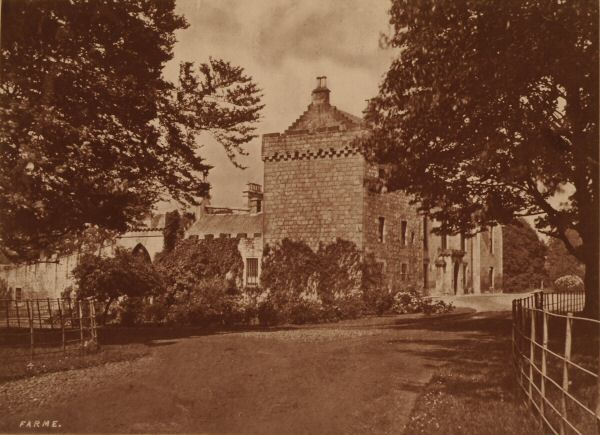
Ferme
Birth
Archibald Fleming, of Catgill, afterwards 1st Baronet of Ferme, was born circa 1599.1
Parents
| Father | William Fleming, Commissary clerk of Glasgow (b. between 1544 and 1599, d. before 20 November 1636) |
| Mother | Margaret Brodie (b. circa 1555) |
Family life
Archibald Fleming, of Catgill, afterwards 1st Baronet of Ferme, and Agnes Gibson entered into a marriage contract on 22 June 1627.2
Children with Agnes Gibson
| Son | William Fleming, 2nd Baronet of Ferme+ (b. 2 June 1639, d. 6 February 1707) |
| Son | Archibald Fleming, of Ferme (b. before 1641) |
| Daughter | Abigail Fleming (b. 19 December 1644) |
| Daughter | Elizabeth Fleming (b. before 9 April 1650) |
| Daughter | Agnes Fleming (b. before 6 April 1651) |
Residence information
Archibald Fleming, of Catgill, afterwards 1st Baronet of Ferme, and Agnes Gibson resided at Rutherglen in Ferme in 1661.2
Titles
Archibald Fleming, of Catgill, afterwards 1st Baronet of Ferme, held the title of Baronet on 25 September 1661. Cokayne -
but is said to have died before the patent was sealed, though it was, in his son's life, recorded in the Great Seal Register
Baronet -
baronet, British hereditary dignity, first created by King James I of England in May 1611. The baronetage is not part of the peerage, nor is it an order of knighthood. A baronet ranks below barons but above all knights except, in England, Knights of the Garter and, in Scotland, Knights of the Garter and of the Thistle. In England and Ireland a baronetcy is inherited by the male heir, but in Scotland ladies may succeed to certain baronetcies where it has been specified at the time of their creation.
Wiki -
A baronet (/ˈbærənɪt/ or /ˈbærəˌnɛt/;[1] abbreviated Bart or Bt[1]) or the female equivalent, a baronetess (/ˈbærənɪtɪs/,[2] /ˈbærənɪtɛs/,[3] or /ˌbærəˈnɛtɛs/;[4] abbreviation Btss), is the holder of a baronetcy, a hereditary title awarded by the British Crown. The title of baronet is mentioned as early as the 14th century; however, in its current usage it was created by James I of England in 1611 as a means of raising funds for the crown.
Baronets rank below barons and above knights bachelor. Like knights, they are addressed as "Sir" (or "Dame" in the case of baronetesses). They are conventionally seen to belong to the lesser nobility, although William Thoms wrote in 1844 that:
The precise quality of this dignity is not yet fully determined, some holding it to be the head of the nobiles minores, while others, again, rank Baronets as the lowest of the nobiles majores, because their honour, like that of the higher nobility, is both hereditary and created by patent.[5]
Comparisons with continental titles and ranks are tenuous due to the British system of primogeniture and because claims to baronetcies must be proven; currently the Official Roll of the Baronetage is overseen by the Ministry of Justice. In practice this means that the UK Peerage and Baronetage consists of about 1,200 families (some peers are also baronets), which is roughly less than 0.01% of UK families.
Wiki -
The only Fleming family on the current list of Baronets is that of Rydal Hall.
Wiki - Fleming Baronets
There have been three baronetcies created for persons with the surname Fleming, one in the Baronetage of Nova Scotia, one in the Baronetage of England and one in the Baronetage of Great Britain. As of 2008 one creation is extant, one extinct and one either extinct or dormant.
The Fleming Baronetcy, of Farme in the County of Glasgow, was created in the Baronetage of Nova Scotia on 25 September 1661 for Archibald Fleming. The title became either extinct or dormant on the death of the seventh Baronet in 1764.
The Fleming, later le Fleming Baronetcy, of Rydal, in the County of Cumberland was created in the Baronetage of England on 4 October 1705. For more information on this creation, see le Fleming baronets.
The Fleming Baronetcy, of Brompton Park in the County of Middlesex, was created in the Baronetage of Great Britain on 22 April 1763 for John Fleming.[1] The title became extinct on his death later the same year.Fleming baronets, of Farme (1661)
[edit]
• Sir Archibald Fleming, 1st Baronet (died 1662)
• Sir William Fleming, 2nd Baronet (1639–1707)
• Sir Archibald Fleming, 3rd Baronet (died 1714)
• Sir Archibald Fleming, 4th Baronet (died 1738)
• Sir Gilbert Fleming, 5th Baronet (died c. 1740)
• Sir William Fleming, 6th Baronet (1699–1746)
• Sir Collingwood Fleming, 7th Baronet (died 1764)Fleming, later le Fleming baronets, of Rydal (1705)
[edit]
• see le Fleming baronetsFleming baronets, of Brompton Park (1763)
[edit]2,3
but is said to have died before the patent was sealed, though it was, in his son's life, recorded in the Great Seal Register
Baronet -
baronet, British hereditary dignity, first created by King James I of England in May 1611. The baronetage is not part of the peerage, nor is it an order of knighthood. A baronet ranks below barons but above all knights except, in England, Knights of the Garter and, in Scotland, Knights of the Garter and of the Thistle. In England and Ireland a baronetcy is inherited by the male heir, but in Scotland ladies may succeed to certain baronetcies where it has been specified at the time of their creation.
Wiki -
A baronet (/ˈbærənɪt/ or /ˈbærəˌnɛt/;[1] abbreviated Bart or Bt[1]) or the female equivalent, a baronetess (/ˈbærənɪtɪs/,[2] /ˈbærənɪtɛs/,[3] or /ˌbærəˈnɛtɛs/;[4] abbreviation Btss), is the holder of a baronetcy, a hereditary title awarded by the British Crown. The title of baronet is mentioned as early as the 14th century; however, in its current usage it was created by James I of England in 1611 as a means of raising funds for the crown.
Baronets rank below barons and above knights bachelor. Like knights, they are addressed as "Sir" (or "Dame" in the case of baronetesses). They are conventionally seen to belong to the lesser nobility, although William Thoms wrote in 1844 that:
The precise quality of this dignity is not yet fully determined, some holding it to be the head of the nobiles minores, while others, again, rank Baronets as the lowest of the nobiles majores, because their honour, like that of the higher nobility, is both hereditary and created by patent.[5]
Comparisons with continental titles and ranks are tenuous due to the British system of primogeniture and because claims to baronetcies must be proven; currently the Official Roll of the Baronetage is overseen by the Ministry of Justice. In practice this means that the UK Peerage and Baronetage consists of about 1,200 families (some peers are also baronets), which is roughly less than 0.01% of UK families.
Wiki -
The only Fleming family on the current list of Baronets is that of Rydal Hall.
Wiki - Fleming Baronets
There have been three baronetcies created for persons with the surname Fleming, one in the Baronetage of Nova Scotia, one in the Baronetage of England and one in the Baronetage of Great Britain. As of 2008 one creation is extant, one extinct and one either extinct or dormant.
The Fleming Baronetcy, of Farme in the County of Glasgow, was created in the Baronetage of Nova Scotia on 25 September 1661 for Archibald Fleming. The title became either extinct or dormant on the death of the seventh Baronet in 1764.
The Fleming, later le Fleming Baronetcy, of Rydal, in the County of Cumberland was created in the Baronetage of England on 4 October 1705. For more information on this creation, see le Fleming baronets.
The Fleming Baronetcy, of Brompton Park in the County of Middlesex, was created in the Baronetage of Great Britain on 22 April 1763 for John Fleming.[1] The title became extinct on his death later the same year.Fleming baronets, of Farme (1661)
[edit]
• Sir Archibald Fleming, 1st Baronet (died 1662)
• Sir William Fleming, 2nd Baronet (1639–1707)
• Sir Archibald Fleming, 3rd Baronet (died 1714)
• Sir Archibald Fleming, 4th Baronet (died 1738)
• Sir Gilbert Fleming, 5th Baronet (died c. 1740)
• Sir William Fleming, 6th Baronet (1699–1746)
• Sir Collingwood Fleming, 7th Baronet (died 1764)Fleming, later le Fleming baronets, of Rydal (1705)
[edit]
• see le Fleming baronetsFleming baronets, of Brompton Park (1763)
[edit]2,3
Working life
- In March 1619 Archibald Fleming, of Catgill, afterwards 1st Baronet of Ferme, was occupied as student at University of Glasgow in Glasgow.4
- In 1637 Archibald Fleming, of Catgill, afterwards 1st Baronet of Ferme, was occupied as Commissary of Glasgow in Glasgow.2
- In February 1640 Archibald Fleming, of Catgill, afterwards 1st Baronet of Ferme, was occupied as commissioner of Glasgow University at Glasgow University in Glasgow.5
- On 13 April 1643 Archibald Fleming, of Catgill, afterwards 1st Baronet of Ferme, was occupied as rector at University of Glasgow in Glasgow. He was still rector on 29 Mar 1644.6,7
- On 14 February 1644 Archibald Fleming, of Catgill, afterwards 1st Baronet of Ferme, was occupied as Advocate.2
- On 15 February 1644 Archibald Fleming, of Catgill, afterwards 1st Baronet of Ferme, was occupied as rector at Glasgow University in Glasgow.8,9
- In April 1645 Archibald Fleming, of Catgill, afterwards 1st Baronet of Ferme, was occupied as commissioner of Glasgow University at Glasgow University in Glasgow.10
- On 26 September 1648 Archibald Fleming, of Catgill, afterwards 1st Baronet of Ferme, was occupied as Burgess and Guild brother in Glasgow.11
- On 23 September 1661 Archibald Fleming, of Catgill, afterwards 1st Baronet of Ferme, was occupied as commissary in Glasgow.3
- 12
Property
Archibald Fleming, of Catgill, afterwards 1st Baronet of Ferme, possessed obtained a crown grant of Eister Kittocksyd via a chain of debt enforcement and assignations originating in a 1605 bond on 23 February 1631 in Eister Kittocksyd.1314,15 He possessed acquired Calzill, Peile and Ferme in Lanarkshire before 1637 at Lanarkshire in Calzill, Peile and Ferme.2 He possessed acquired Peill before 1637 in Peill.16 He possessed bought Crawfurdferme from Ludovic Stewart of Mynto and Colin Campbell in 1656 in Crawfurdsferme.1,17
Death
Citations
- [S27] Various genealogists, Various genealogists, "World Family Tree," pedigree, MyHeritage Ltd, Geni (https://www.geni.com/: accessed ), ., online; 12 March 2025; Archibald Fleming of Ferme, d 1661

- [S96] George E Cokayne, Complete Baronetage, vol iii, p 331-333
- [S43] Scotland Court of Exchequer, Registrum Magni Sigilli Regum Scotorum, vol xi, 1660-1668, ch 121, p 57
- [S124] Cosmo Innes, Records of the University of Glasgow, vol iii, p 74
- [S124] Cosmo Innes, Records of the University of Glasgow, vol iii, p 322
- [S124] Cosmo Innes, Records of the University of Glasgow, vol iii, p 384
- [S124] Cosmo Innes, Records of the University of Glasgow, vol Preface and Indices, p lix
- [S96] George E Cokayne, Complete Baronetage, vol iii, p 430
- [S96] George E Cokayne, Complete Baronetage, vol iii, p 573
- [S124] Cosmo Innes, Records of the University of Glasgow, vol iii, p 323
- [S27] Various genealogists, Various genealogists, "World Family Tree," pedigree, MyHeritage Ltd, Geni (https://www.geni.com/: accessed ), ., online; 12 March 2025; William Fleming, Burgess of Glasgow
- [S148] editor P Hume Brown, "Act appointing new commissioners of excise in Lanarkshire," The Register of the Privy Council of Scotland, third series, vol iv, 1673-1676 (1911), online image (https://babel.hathitrust.org/cgi/pt?id=hvd.32044032328007&seq=450 : viewed 25 Aug 2025), p 399.
- [S43] Scotland Court of Exchequer, Registrum Magni Sigilli Regum Scotorum, vol ix, 1634-1651, ch 1889, p 702-703
- [S43] Scotland Court of Exchequer, Registrum Magni Sigilli Regum Scotorum, vol viii, 1620-1633, ch 2234, p 754
- [S43] Scotland Court of Exchequer, Registrum Magni Sigilli Regum Scotorum, vol viii, 1620-1633, ch 719, p 262-262
- [S124] Cosmo Innes, Records of the University of Glasgow, vol iii, p 380
- [S27] Various genealogists, Various genealogists, "World Family Tree," pedigree, MyHeritage Ltd, Geni (https://www.geni.com/: accessed ), ., 12 March 2025; William Fleming of Ferme 1639-1707
- [S43] Scotland Court of Exchequer, Registrum Magni Sigilli Regum Scotorum, vol xi, 1660-1668, ch 293, p 148
| Last Edited | 25 September 2025 |