FlemingClans.com

"The Fleming Clan of Scotland: a genealogical history" - coming in late 2026!
Person Page 790
Clementina Elphinstone-Fleming
b. 1 June 1822, d. 1866
Person Exhibits
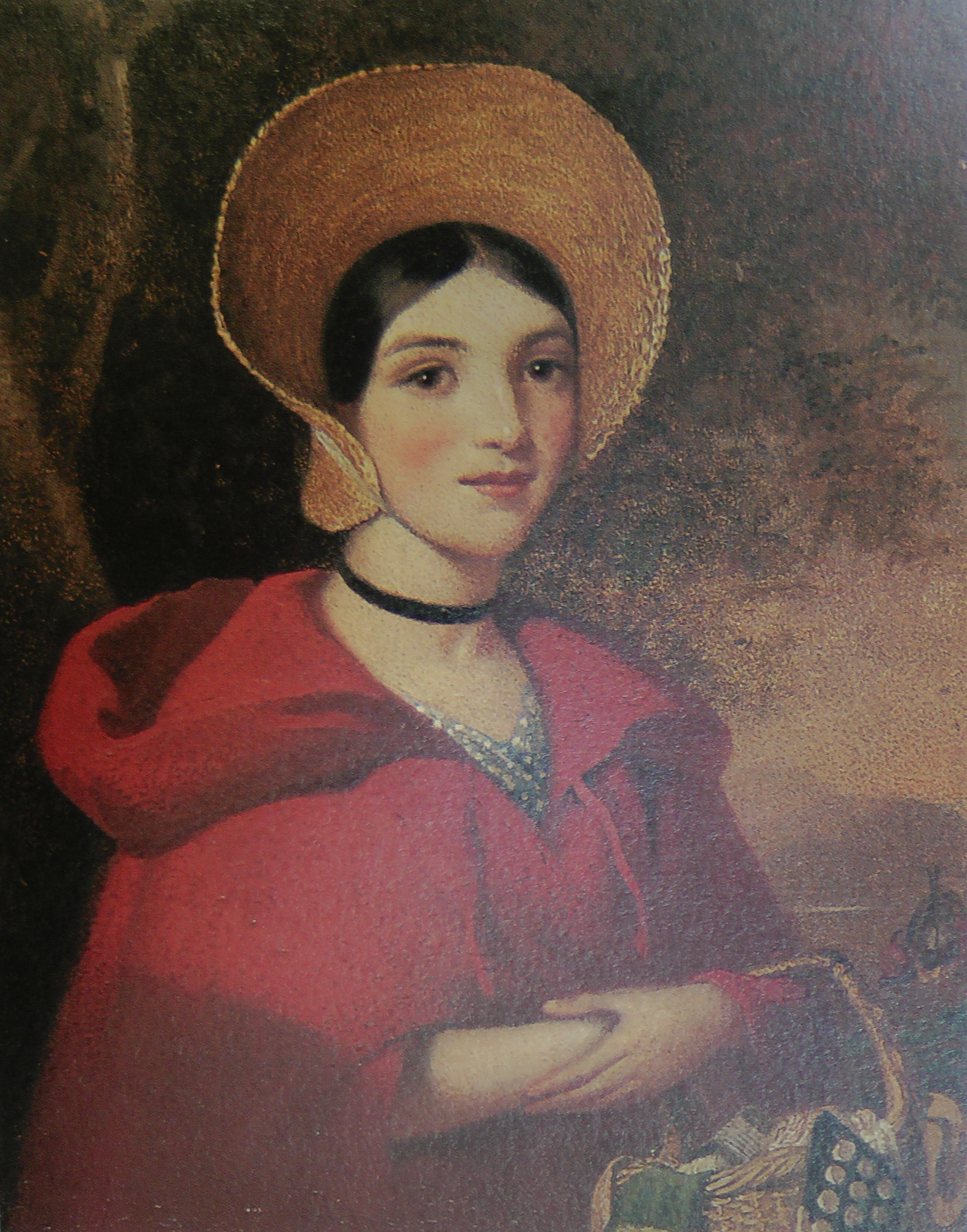
Clementina Elphinstone-Fleming
Birth
Clementina Elphinstone-Fleming was born on 1 June 1822. Photographs by Clementina Fleeming, Lady Hawarden
Lady Clementina Hawarden – An Introduction (from the V&A Website)
Lady Hawarden is an enigmatic figure – much of her life remains a mystery. Most of what we do know about Hawarden has been pieced together from her photographs. She was born Clementina Elphinstone Fleming on 1 June 1822, in Cumbernauld, near Glasgow. Her father, Admiral Charles Elphinstone Fleeming, was well-known for his part in the Venezuelan and Colombian wars of liberation (about 1811 – 25). Little is known about her Spanish mother, Catalina Paulina Alessandro, an 'exotic beauty' 26 years younger than her husband.
Clementina married Cornwallis Maude, 4th Viscount Hawarden, in 1845 and lived in London until 1857, when she moved with her husband to the family estate in Dundrum, Co. Tipperary, Ireland. Here, she first started to experiment with photography, taking stereoscopic landscape photographs (capturing two slightly offset photographs to create a 3D effect) around the Dundrum estate.
Hawarden was absorbed in motherhood, having ten children – two boys and eight girls – and yet she found time to be a prolific photographer. In 1859 the family moved back to London, where Hawarden began to photograph her daughters, first making stereoscopic photographs, before moving to large-format, stand-alone portraits.
Her work records the domestic life of an upper-class mid-Victorian woman. While male photographers at that time often set off to explore faraway places, Hawarden had to work close to home. But by creating exquisite images of her adolescent daughters, she staked out new perimeters for art photography.
Hawarden made albumen prints from wet-collodion negatives. Introduced in 1851, wet-collodion negatives were widely used since the exposure time was relatively short. The negatives were made by coating a sheet of glass with a thin film of collodion (guncotton dissolved in ether). This was sensitised on location with silver nitrate to form light-sensitive silver salts. For maximum sensitivity, the plate had to be placed in the camera and exposed while still wet, and then developed and fixed immediately.Full-Length Photographs of Her Daughters
• Untitled (Clementina and Isabella Grace)
• Untitled (Clementina Maude before a window and her reflection in a mirror)
• Untitled (Clementina Maude barefoot with her back to the window and her reflection)
• Clementina Maude [Reclining] at 5 Princes Gardens
• Clementina Maude and Isabella Grace [One in Peasant Costume]
• Clementina Maude and Isabella Grace [One standing, the other reclining]
• Photographic Study [Clementina Maude, Seated]Landscape or Outdoor Subjects
• Dundrum House Grounds [and Woodsmen]
• The Terrace at 5 Princes Gardens [with 3 children]Miscellaneous
• Possibly self portrait of Lady Clementina Hawarden with Donald Cameron of Lochiel
• Photographic Study [Rear view of Girl (Clementina Maude?) with bare shoulders at window]Bibliography
Dodier, Virginia. Lady Clementina Hawarden. Studies from Life, 1857-1864. London and New York: Aperture Books, 1999.
Mavor, Carole. Becoming. The Photography of Lady Clementina Hawarden. Durham, N.C.: Duke University Press 1999.Exhibitions
The Golden Age of British Photography, 1839–1900. Victorian & Albert Museum. 1984.
Clementina, Viscountess Hawarden. Photography. Victorian & Albert Museum. September 1989 to January 1990.
Lady Hawarden, Photographe victorien. Musée d’Orsay, Museum of Modern Art in New York, and the Getty Museum in Malibu, California. 1991.
Lady Clementina Hawarden – An Introduction (from the V&A Website)
Lady Hawarden is an enigmatic figure – much of her life remains a mystery. Most of what we do know about Hawarden has been pieced together from her photographs. She was born Clementina Elphinstone Fleming on 1 June 1822, in Cumbernauld, near Glasgow. Her father, Admiral Charles Elphinstone Fleeming, was well-known for his part in the Venezuelan and Colombian wars of liberation (about 1811 – 25). Little is known about her Spanish mother, Catalina Paulina Alessandro, an 'exotic beauty' 26 years younger than her husband.
Clementina married Cornwallis Maude, 4th Viscount Hawarden, in 1845 and lived in London until 1857, when she moved with her husband to the family estate in Dundrum, Co. Tipperary, Ireland. Here, she first started to experiment with photography, taking stereoscopic landscape photographs (capturing two slightly offset photographs to create a 3D effect) around the Dundrum estate.
Hawarden was absorbed in motherhood, having ten children – two boys and eight girls – and yet she found time to be a prolific photographer. In 1859 the family moved back to London, where Hawarden began to photograph her daughters, first making stereoscopic photographs, before moving to large-format, stand-alone portraits.
Her work records the domestic life of an upper-class mid-Victorian woman. While male photographers at that time often set off to explore faraway places, Hawarden had to work close to home. But by creating exquisite images of her adolescent daughters, she staked out new perimeters for art photography.
Hawarden made albumen prints from wet-collodion negatives. Introduced in 1851, wet-collodion negatives were widely used since the exposure time was relatively short. The negatives were made by coating a sheet of glass with a thin film of collodion (guncotton dissolved in ether). This was sensitised on location with silver nitrate to form light-sensitive silver salts. For maximum sensitivity, the plate had to be placed in the camera and exposed while still wet, and then developed and fixed immediately.Full-Length Photographs of Her Daughters
• Untitled (Clementina and Isabella Grace)
• Untitled (Clementina Maude before a window and her reflection in a mirror)
• Untitled (Clementina Maude barefoot with her back to the window and her reflection)
• Clementina Maude [Reclining] at 5 Princes Gardens
• Clementina Maude and Isabella Grace [One in Peasant Costume]
• Clementina Maude and Isabella Grace [One standing, the other reclining]
• Photographic Study [Clementina Maude, Seated]Landscape or Outdoor Subjects
• Dundrum House Grounds [and Woodsmen]
• The Terrace at 5 Princes Gardens [with 3 children]Miscellaneous
• Possibly self portrait of Lady Clementina Hawarden with Donald Cameron of Lochiel
• Photographic Study [Rear view of Girl (Clementina Maude?) with bare shoulders at window]Bibliography
Dodier, Virginia. Lady Clementina Hawarden. Studies from Life, 1857-1864. London and New York: Aperture Books, 1999.
Mavor, Carole. Becoming. The Photography of Lady Clementina Hawarden. Durham, N.C.: Duke University Press 1999.Exhibitions
The Golden Age of British Photography, 1839–1900. Victorian & Albert Museum. 1984.
Clementina, Viscountess Hawarden. Photography. Victorian & Albert Museum. September 1989 to January 1990.
Lady Hawarden, Photographe victorien. Musée d’Orsay, Museum of Modern Art in New York, and the Getty Museum in Malibu, California. 1991.
Parents
| Father | Admiral the Honourable Charles Elphinstone-Fleming, of Cumbernauld (b. June 1774, d. 30 October 1840) |
| Mother | Donna Catalina-Paulina-Alessandro |
Child with Cornwallis Maude
| Son | Cornwallis Maude-Fleming (b. 1852) |
Death
Clementina Elphinstone-Fleming died in 1866 at age ~44. After his Lordship's death an attempt was made to attach the Wigton estates in payment of certain debts which he had contracted. His sister Clementina, who, in 1845, had married Viscount Hawarden, an Irish peer, connected with the coiinty of Tipperary, therefore, raised an action of declarator in the Court of Session to have it found that the entails were valid and effectual, and that the estates in consequence were incapable of being alienated by the deceased, or attached by the Trustee appointed to wind up his affairs. It was unanimously decided by the Second Division of the Court in March 1865, that the estates were effectually entailed, and could not be held liable for his Lordship's debts. By a subsequent action it was also declared by the same Division of the Court in February 1866, that Lady Hawarden, in virtue of the terms of the entail, had a right to succeed to the estates at the time John Fleming succeeded to the Peerage as Lord Elphinstone, and that Mr George Dunlop of Gogar House, Edinburgh, who had, in 1854, received a disposition of the Cumbernauld estates from John Fleming, in security for money advanced to him, had no right to the rents or profits of that estate after the said John Fleming had succeeded to the Peerage. The Trustee on Lord Elphinstone's estate afterwards carried the case by appeal to the House of Lords, but their Lordships confirmed the decision of the Court below.
Viscountess Hawarden having died in 18661
Viscountess Hawarden having died in 18661
Citations
- [S5] William Hunter, Biggar and the House of Fleming, p 567
| Last Edited | 5 May 2025 |