FlemingClans.com

"The Fleming Clan of Scotland: a genealogical history" - coming in late 2026!
Person Page 444
John ("the Covenanter") Fleming, 2nd Earl of Wigtown, 7th Lord Fleming
b. before 5 December 1589, d. 7 May 1650
Person Exhibits
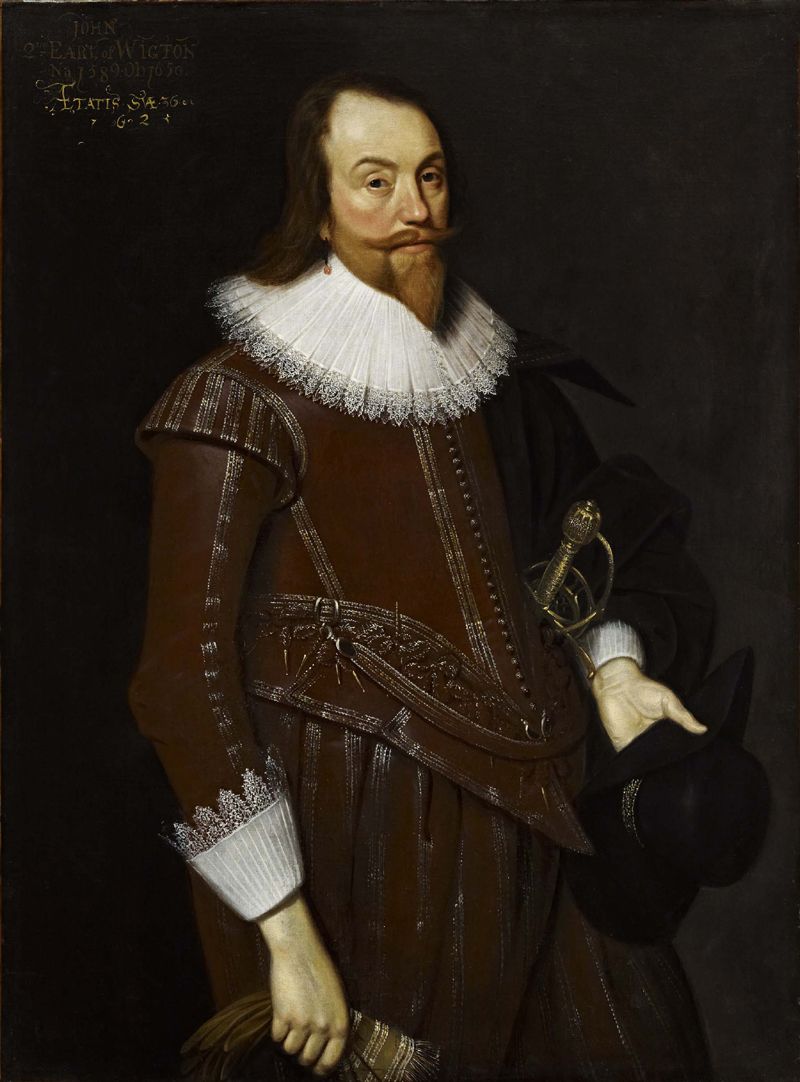
13 John 2nd Earl 7th Lord

Birth
John ("the Covenanter") Fleming, 2nd Earl of Wigtown, 7th Lord Fleming, was born before 5 December 1589 in Kincardine.1 He was baptized on 5 December 1589 in Kincardine Castle. The christening was attended by the Duke of Lennox and the Earl of Bothwell.2
Parents
| Father | John ("the Arbitrator") Fleming, 1st Earl of Wigtown and 6th Lord Fleming (b. 1567, d. after 12 August 1619) |
| Mother | Lilias Graham |
Family life
John ("the Covenanter") Fleming, 2nd Earl of Wigtown, 7th Lord Fleming, and Margaret Livingstone, Countess of Wigtown, entered into a marriage contract on 20 February 1609 She had a tocher of 28,000 merks.
Please summarise the meaning of this charter: "1110. At Edinburgh, 25 Aug. THE KING, for good service, — with consent &c. (175.), — granted Lady MARGAEETE LEVINGSTOUN second legitimate daughter of Alexander com. of Lenlithgow lord. Levingstoun and Callendar, in life rent, — under the provisions contained in the marriage contract dated 12, 15, 16, and 18 Feb., registered in the council books 20 Jun., 1609, — 3 pounds. of the dominical lands of Boighall with fort and manor, the lands and barony of Biggar (except the lands called Scheills and Scheilhill), the feuds of 3i burgh lands of Biggar (viz. 2^ held by Jac. Threipland senior in the town of B., and 1 by Jo. Fleming of Carwode.) ; — also to JOHN iIAGISTRO DE WIGTOUJ^ son and heirs apparent! John Earl of W. Lord Fleming and Cummernald &c., and the heirs male between him and the said Marg. then his bride lawfully begotten, who failing whom, the heirs male of the said master of the bodies legit, begotten, who def., to the said Earl of W. and his heirs male and tallie in his last infeofament of the jufrascripts contained, — the lands and barony of Auchtermony, vie. of Sterling; the lands and barony of Leinzie, with the town and burgh of KirkingtuUo, 5 pounds of the lands of Cummernald, with the dominical lands, castle and free forest thereof, vie. of Dumbertan; the diet, lands &c. of Boighall, the town and burgh of Biger with the acres about the same, the lands and barony of Bigar, vie. of Lanerk; lands of Ovir Mynzeane, Ovir Kingildures, the superiority of half of Glenrusco, an acre of lands of Olivercastell lying on the eastern side of the stream of lie 0. on the side of the public road, lands of Urisland and the mill of the same, Logan, Mosfennan, Quarter, Ghappelgill, with the advowson of the rectory and vicarage of Glenquhome to the diet, united lands, lands of Cardron, vie. of Pebble; half of the lands of Sunderland, with the fort, mills, tenants &c., vie. of Selkirk; 24 markets of lands of Loure, vie. of Forfar; 24 markets of Dunbull, vie. of Perth; lands called Fressilland extending to 3 pounds, in the constableship of Hadington, vie. of Edinburgh; with the mills, fisheries, camps, tenements, &c., advowsons of all the churches and chaplaincies above-mentioned, erected into one lordship and barony of Cummernald; the office of principal bailiff and keeper of the royal house and chamber; — all which the said Earl of W. resigned; — also to the said JOHN EARLY OF WIGTOUX, in life rent, and to the said master and heirs aforesaid in fee, — the lands of Thankertoun, vie. of Lanerk, an annual rent of 50 pounds sterling from the lands of Kers pertaining to the abbey of Halyruidhous, 'ic.of Stirling; — which Jo. then lord. Thirk'stane resigned with the consent of his curators; — and all which the king has given to the said persons respectively anew, including the lands and barony of Thankertoun, with manors, forts, mills, fisheries, tenants &c., advowsons of churches and chaplaincies; with a fishery on the water of Carroun called Buthkenner (within bonds specified in the common), via Stirling: — RESERVING to the said com. of W. Uber the tenement of the above-mentioned (except those granted by the said Marg.), with the power to enter vassals, to lease assedations without diminution of rent nor for a greater than a life-rent or for a period of 19 years, and to grant one or more wives in lieu of the above-mentioned (except as above) as much as would render annually 20 celdras of food: — Furthermore the king has anew erected the towns and burghs of KIRKINTULLO and BIGGAR, with acres and lands in their territories, — into free burghs of the baronies; granting the inhabitants the liberty of buying and selling &c., and that they should be free burgesses, and, with the consent of the said master, should elect bailiffs &c., and should hold the forecourt cross, and the market every week, viz. in Biggar on Sabbath and in Kirkintilloch on the same day, with a free market yearly, in Biggar on 29 June, St. Peter's day and in Kirkintilloch on 9 October, St. Denis' day, lasting for the same octaves; with power to the said master to assign lands and acres about the said, burghs in separate burghs; with tolls &c.; — and all the above-mentioned newly incorporated the free lordship and barony of Cummernald, ordaining the castle of C. to be the principal messuage; and declared that the said person alone should hold the sects and presentments of the said lands to the chief courts via Dumbarton: — Tenend. with free forests where there are woods: — To pay. for Cummernald, Boighall and the burgh of Biggar one pair of limes of gold, for Aucbermony another pair of limes of gold, for the said ann. to pay one den. at the church of Falkirk, if they were only asked for; for the rest the service of the ward &c (paying for all except Thankertoun and the fishing of Carroun 1000 pounds for the value of the ward and non-introitus, 300 mere, for relief, 1 200 mercas for marriage) : — Test, as in other charters &c. xlvii. 31"
Certainly! This 1610 charter is a monumental consolidation of Fleming family lands and privileges, issued by King James VI. Here's a structured summary of its meaning:
🧾 Charter Summary: Edinburgh, 25 August 1610👤 Parties Involved
•
Lady Margaret Levingstoun: Second daughter of Alexander, Earl of Linlithgow. Granted a life-rent as part of her marriage contract.
•
John Fleming, Master of Wigtown: Heir apparent to John, Earl of Wigtown. Receives lands in fee (ownership).
•
John, Earl of Wigtown: Resigns extensive estates and offices to his son and daughter-in-law.💍 Marriage Provisions
•
Based on a marriage contract dated February 1609 and registered in June 1609.
•
Lady Margaret receives:
o
3 pounds of dominical lands of Boghall with its fort and manor.
o
Most of the barony of Biggar, excluding Scheills and Scheilhill.
o
Feu duties from three burgh lands in Biggar.🏰 Lands Granted to the Master of Wigtown and His Heirs
These are granted to him and his male heirs with Margaret, or failing them, to his other lawful male heirs, and ultimately reverting to the Earl’s heirs per his last entail:
•
Baronies and Estates:
o
Auchtermony (Stirlingshire)
o
Lenzie and Kirkintilloch (Stirlingshire)
o
Cumbernauld (Dumbartonshire), including castle and forest
o
Biggar and Boghall (Lanarkshire)
o
Cardron (Peeblesshire)
o
Sunderland (Selkirkshire)
o
Loure (Forfarshire)
o
Dunbullis (Perthshire)
o
Fressilland (Haddingtonshire)
•
Additional Holdings:
o
Ovir Mynzeane, Ovir Kingildures, Glenrusco, Olivercastell, Urisland, Logan, Mosfennan, Quarter, Ghappelgill
o
Mills, fisheries, tenements, and advowsons (church patronage rights)🏛 Administrative and Noble Privileges
•
Office of Principal Bailiff and Keeper of the Royal House and Chamber
•
Creation of Free Burghs:
o
Kirkintilloch and Biggar elevated to free burghs of barony.
o
Weekly markets and annual fairs established (St. Peter’s Day in Biggar, St. Denis’ Day in Kirkintilloch).
o
Right to elect bailiffs and assign burgh lands.💰 Feudal Duties and Reservations
•
Symbolic payments:
o
One pair of gilded spurs for Cumbernauld, Boghall, and Biggar.
o
Another pair for Auchtermony.
o
One penny at Falkirk for the annuity.
•
Real obligations:
o
£1000 for ward and non-entry
o
300 merks for relief
o
1200 merks for marriage
•
Reservations to the Earl:
o
Right to lease lands (up to 19 years or life-rent)
o
Right to infeft additional spouses in lands yielding up to 20 chalders of victual annually🧬 Historical Significance
This charter represents the formal consolidation of the Fleming estates into the free lordship and barony of Cumbernauld, with the castle designated as the principal messuage. It also reflects the transition of power from the Earl to his heir, securing the Fleming legacy through strategic marriage and royal favor.1,3,4
Please summarise the meaning of this charter: "1110. At Edinburgh, 25 Aug. THE KING, for good service, — with consent &c. (175.), — granted Lady MARGAEETE LEVINGSTOUN second legitimate daughter of Alexander com. of Lenlithgow lord. Levingstoun and Callendar, in life rent, — under the provisions contained in the marriage contract dated 12, 15, 16, and 18 Feb., registered in the council books 20 Jun., 1609, — 3 pounds. of the dominical lands of Boighall with fort and manor, the lands and barony of Biggar (except the lands called Scheills and Scheilhill), the feuds of 3i burgh lands of Biggar (viz. 2^ held by Jac. Threipland senior in the town of B., and 1 by Jo. Fleming of Carwode.) ; — also to JOHN iIAGISTRO DE WIGTOUJ^ son and heirs apparent! John Earl of W. Lord Fleming and Cummernald &c., and the heirs male between him and the said Marg. then his bride lawfully begotten, who failing whom, the heirs male of the said master of the bodies legit, begotten, who def., to the said Earl of W. and his heirs male and tallie in his last infeofament of the jufrascripts contained, — the lands and barony of Auchtermony, vie. of Sterling; the lands and barony of Leinzie, with the town and burgh of KirkingtuUo, 5 pounds of the lands of Cummernald, with the dominical lands, castle and free forest thereof, vie. of Dumbertan; the diet, lands &c. of Boighall, the town and burgh of Biger with the acres about the same, the lands and barony of Bigar, vie. of Lanerk; lands of Ovir Mynzeane, Ovir Kingildures, the superiority of half of Glenrusco, an acre of lands of Olivercastell lying on the eastern side of the stream of lie 0. on the side of the public road, lands of Urisland and the mill of the same, Logan, Mosfennan, Quarter, Ghappelgill, with the advowson of the rectory and vicarage of Glenquhome to the diet, united lands, lands of Cardron, vie. of Pebble; half of the lands of Sunderland, with the fort, mills, tenants &c., vie. of Selkirk; 24 markets of lands of Loure, vie. of Forfar; 24 markets of Dunbull, vie. of Perth; lands called Fressilland extending to 3 pounds, in the constableship of Hadington, vie. of Edinburgh; with the mills, fisheries, camps, tenements, &c., advowsons of all the churches and chaplaincies above-mentioned, erected into one lordship and barony of Cummernald; the office of principal bailiff and keeper of the royal house and chamber; — all which the said Earl of W. resigned; — also to the said JOHN EARLY OF WIGTOUX, in life rent, and to the said master and heirs aforesaid in fee, — the lands of Thankertoun, vie. of Lanerk, an annual rent of 50 pounds sterling from the lands of Kers pertaining to the abbey of Halyruidhous, 'ic.of Stirling; — which Jo. then lord. Thirk'stane resigned with the consent of his curators; — and all which the king has given to the said persons respectively anew, including the lands and barony of Thankertoun, with manors, forts, mills, fisheries, tenants &c., advowsons of churches and chaplaincies; with a fishery on the water of Carroun called Buthkenner (within bonds specified in the common), via Stirling: — RESERVING to the said com. of W. Uber the tenement of the above-mentioned (except those granted by the said Marg.), with the power to enter vassals, to lease assedations without diminution of rent nor for a greater than a life-rent or for a period of 19 years, and to grant one or more wives in lieu of the above-mentioned (except as above) as much as would render annually 20 celdras of food: — Furthermore the king has anew erected the towns and burghs of KIRKINTULLO and BIGGAR, with acres and lands in their territories, — into free burghs of the baronies; granting the inhabitants the liberty of buying and selling &c., and that they should be free burgesses, and, with the consent of the said master, should elect bailiffs &c., and should hold the forecourt cross, and the market every week, viz. in Biggar on Sabbath and in Kirkintilloch on the same day, with a free market yearly, in Biggar on 29 June, St. Peter's day and in Kirkintilloch on 9 October, St. Denis' day, lasting for the same octaves; with power to the said master to assign lands and acres about the said, burghs in separate burghs; with tolls &c.; — and all the above-mentioned newly incorporated the free lordship and barony of Cummernald, ordaining the castle of C. to be the principal messuage; and declared that the said person alone should hold the sects and presentments of the said lands to the chief courts via Dumbarton: — Tenend. with free forests where there are woods: — To pay. for Cummernald, Boighall and the burgh of Biggar one pair of limes of gold, for Aucbermony another pair of limes of gold, for the said ann. to pay one den. at the church of Falkirk, if they were only asked for; for the rest the service of the ward &c (paying for all except Thankertoun and the fishing of Carroun 1000 pounds for the value of the ward and non-introitus, 300 mere, for relief, 1 200 mercas for marriage) : — Test, as in other charters &c. xlvii. 31"
Certainly! This 1610 charter is a monumental consolidation of Fleming family lands and privileges, issued by King James VI. Here's a structured summary of its meaning:
🧾 Charter Summary: Edinburgh, 25 August 1610👤 Parties Involved
•
Lady Margaret Levingstoun: Second daughter of Alexander, Earl of Linlithgow. Granted a life-rent as part of her marriage contract.
•
John Fleming, Master of Wigtown: Heir apparent to John, Earl of Wigtown. Receives lands in fee (ownership).
•
John, Earl of Wigtown: Resigns extensive estates and offices to his son and daughter-in-law.💍 Marriage Provisions
•
Based on a marriage contract dated February 1609 and registered in June 1609.
•
Lady Margaret receives:
o
3 pounds of dominical lands of Boghall with its fort and manor.
o
Most of the barony of Biggar, excluding Scheills and Scheilhill.
o
Feu duties from three burgh lands in Biggar.🏰 Lands Granted to the Master of Wigtown and His Heirs
These are granted to him and his male heirs with Margaret, or failing them, to his other lawful male heirs, and ultimately reverting to the Earl’s heirs per his last entail:
•
Baronies and Estates:
o
Auchtermony (Stirlingshire)
o
Lenzie and Kirkintilloch (Stirlingshire)
o
Cumbernauld (Dumbartonshire), including castle and forest
o
Biggar and Boghall (Lanarkshire)
o
Cardron (Peeblesshire)
o
Sunderland (Selkirkshire)
o
Loure (Forfarshire)
o
Dunbullis (Perthshire)
o
Fressilland (Haddingtonshire)
•
Additional Holdings:
o
Ovir Mynzeane, Ovir Kingildures, Glenrusco, Olivercastell, Urisland, Logan, Mosfennan, Quarter, Ghappelgill
o
Mills, fisheries, tenements, and advowsons (church patronage rights)🏛 Administrative and Noble Privileges
•
Office of Principal Bailiff and Keeper of the Royal House and Chamber
•
Creation of Free Burghs:
o
Kirkintilloch and Biggar elevated to free burghs of barony.
o
Weekly markets and annual fairs established (St. Peter’s Day in Biggar, St. Denis’ Day in Kirkintilloch).
o
Right to elect bailiffs and assign burgh lands.💰 Feudal Duties and Reservations
•
Symbolic payments:
o
One pair of gilded spurs for Cumbernauld, Boghall, and Biggar.
o
Another pair for Auchtermony.
o
One penny at Falkirk for the annuity.
•
Real obligations:
o
£1000 for ward and non-entry
o
300 merks for relief
o
1200 merks for marriage
•
Reservations to the Earl:
o
Right to lease lands (up to 19 years or life-rent)
o
Right to infeft additional spouses in lands yielding up to 20 chalders of victual annually🧬 Historical Significance
This charter represents the formal consolidation of the Fleming estates into the free lordship and barony of Cumbernauld, with the castle designated as the principal messuage. It also reflects the transition of power from the Earl to his heir, securing the Fleming legacy through strategic marriage and royal favor.1,3,4
Children with Margaret Livingstone, Countess of Wigtown, (d. after 1634)
| Son | Colonel John ("the Soldier") Fleming, 3rd Earl of Wigtown, 8th Lord Fleming+ (b. circa 1608, d. February 1665) |
| Son | Alexander Fleming+ (b. circa 1610, d. before 13 April 1661) |
| Son | Sir William Fleming, His Majesty's Gentleman Usher (b. circa 1611, d. before 26 June 1672) |
| Daughter | Jean Fleming (b. circa 1614, d. before 1646) |
| Daughter | Eleanor ("Helenor") Fleming (b. circa 1615, d. 20 April 1652) |
| Daughter | Ann Fleming (b. circa 1619, d. 20 April 1661) |
| Daughter | Lilias Fleming (b. circa 1621) |
Titles
John ("the Covenanter") Fleming, 2nd Earl of Wigtown, 7th Lord Fleming, held the title of inherited the title of Lord Fleming on the elevation of his father as Earl of Wigtown on 1 July 1606.5,3 He held the title of became 2nd Earl of Wigtown on the death of his father after 12 August 1619.6
He held the title of became 2nd Earl of Wigtown on the death of his father after 12 August 1619.6 Working life
- On 27 June 1611 John ("the Covenanter") Fleming, 2nd Earl of Wigtown, 7th Lord Fleming, was occupied as was one of several commissioners charged with apprehending Alexander Hamilton and Samuel Inglius, horned rebels accused of the slaughter of the late James Veitch.7
- On 27 August 1617 John ("the Covenanter") Fleming, 2nd Earl of Wigtown, 7th Lord Fleming, was occupied as was admitted to the Privy Council in Holyrood House. His father was still an active member, as Earl of Wigtown. Lord Fleming subsequently attended the Council very frequently.8
- On 11 December 1617 John ("the Covenanter") Fleming, 2nd Earl of Wigtown, 7th Lord Fleming, was occupied as was given a commission to try William Gibson for murder in Edinburgh.9
- On 4 November 1618 John ("the Covenanter") Fleming, 2nd Earl of Wigtown, 7th Lord Fleming, was occupied as was given a commission by the Privy Council to try William Scott for the murder of William Hay.10
- On 24 November 1620 John ("the Covenanter") Fleming, 2nd Earl of Wigtown, 7th Lord Fleming, was occupied as was appointed by the Privy Council to a committee on the Palatine defence in Edinburgh.11
- On 15 May 1622 John ("the Covenanter") Fleming, 2nd Earl of Wigtown, 7th Lord Fleming, was occupied as was appointed by the Privy Council as a commissioner to try Thomas Stark in Drungone for witchcraft.12
- On 4 June 1622 John ("the Covenanter") Fleming, 2nd Earl of Wigtown, 7th Lord Fleming, was occupied as was appointed an assessor to the Justice in the trial of Andrew Haddowie and his wife for the reset of George Mortimer, a trafficking Jesuit.13
- On 13 June 1622 John ("the Covenanter") Fleming, 2nd Earl of Wigtown, 7th Lord Fleming, was occupied as was appointed to try Janet McIllwichill for witchcraft. According to Masson, between 1622 and 1625 Wigtown attended the Privy Council infrequently, but volume xiii doesn't support this, with presences recorded in 18 Sederunts.14,15
- On 12 June 1623 John ("the Covenanter") Fleming, 2nd Earl of Wigtown, 7th Lord Fleming, was occupied as had a commission for the trial of John Braidwood for various thefts in Holyrood House.16
- On 8 July 1623 John ("the Covenanter") Fleming, 2nd Earl of Wigtown, 7th Lord Fleming, was occupied as had a commission to try Roger Swanston for theft in Holyrood House.17
- On 1 October 1623 John ("the Covenanter") Fleming, 2nd Earl of Wigtown, 7th Lord Fleming, was occupied as had a commission of justiciary to try William Ure, John Howie and Gilbert Fleming for theft in Holyrood House.18
- On 30 March 1624 John ("the Covenanter") Fleming, 2nd Earl of Wigtown, 7th Lord Fleming, was occupied as had a commission as justiciary to try James Hendrie and his wife for thefts in Kirkintilloch.19
- On 8 July 1624 John ("the Covenanter") Fleming, 2nd Earl of Wigtown, 7th Lord Fleming, was occupied as had a commission of justiciary to try James Stevinson in Carwood for theft in Holyrood House.20
- On 2 November 1625 John ("the Covenanter") Fleming, 2nd Earl of Wigtown, 7th Lord Fleming, was occupied as was commissioned as justiciary to try three men and five women for picking pockets at Biggar Fair in Edinburgh.21
- On 23 March 1626 John ("the Covenanter") Fleming, 2nd Earl of Wigtown, 7th Lord Fleming, was occupied as was appointed by the king as one of 47 members of the newly reconstituted Privy Council in Holyrood House.22,23,24
- On 11 July 1626 John ("the Covenanter") Fleming, 2nd Earl of Wigtown, 7th Lord Fleming, was occupied as was appointed one of 68 commissioners for the surrenders under the King's policy of revocation of the alienation of church lands to private ownership since 1540. The king's policy of revocation was very unpopular with the nobles affected and was one of the first issues that built towards the Bishops Wars.25,26,27
- On 25 October 1626 John ("the Covenanter") Fleming, 2nd Earl of Wigtown, 7th Lord Fleming, was occupied as was one of many commissioners appointed by the king to explore the Papist issue and try Papists in Whitehall.28
- On 17 January 1627 John ("the Covenanter") Fleming, 2nd Earl of Wigtown, 7th Lord Fleming, was occupied as was appointed one of many commissioners for Surrenders and Teinds that result from his Edict of Revocation in Whitehall.29
- On 3 July 1627 John ("the Covenanter") Fleming, 2nd Earl of Wigtown, 7th Lord Fleming, was occupied as Privy Councillor. PC Regiter 1627-68 says that Wigtown was permanently absent, but that it not borne out by the records.30,31
- On 23 July 1629 John ("the Covenanter") Fleming, 2nd Earl of Wigtown, 7th Lord Fleming, was occupied as was appointed by the Privy Council to the committee for the suppression of Papists at Edinburgh in Holyrood House.32
- On 21 April 1630 John ("the Covenanter") Fleming, 2nd Earl of Wigtown, 7th Lord Fleming, was occupied as was appointed by the Privy Council as Commissioner to try William Watsoun, indweller and Banker, for theft at Edinburgh in Holyrood House.33
- On 23 June 1630 John ("the Covenanter") Fleming, 2nd Earl of Wigtown, 7th Lord Fleming, was occupied as was one of several commissioners appointed by the king to investigate and negotiate with Francis Errol Earth, the chief constable of Scotland, over the ancient privileges and fees of his office in Whitehall.34
- On 15 December 1630 John ("the Covenanter") Fleming, 2nd Earl of Wigtown, 7th Lord Fleming, was occupied as was appointed by the Privy Council as one of the Commissioners to examine Margaret Wood under slight and spaire torture for better discovery of the truth at Edinburgh in Holyrood House.35
- In June 1632 John ("the Covenanter") Fleming, 2nd Earl of Wigtown, 7th Lord Fleming, was occupied as was confirmed by the Privy Council as an arbiter nominated by Sir Thomas Boyd in the latter's dispute with Mr Hew Montgomerie at Edinburgh in Holyrood House.36
- In 1633 John ("the Covenanter") Fleming, 2nd Earl of Wigtown, 7th Lord Fleming, was occupied as was elected one of the commissioners anent the offices of Admiraltie and Chamberlainrie, to ascertain the honors, dignities, privileges, fees, and duties of the same, and how they may be best bruiked by the Duke of Lenox, heritable Great Admiral and Chamberlaine.37
- On 18 June 1633 John ("the Covenanter") Fleming, 2nd Earl of Wigtown, 7th Lord Fleming, was occupied as participated as Great Usher in the lavish coronation ceremony for King Charles I at Edinburgh in Holyrood Palace.38
- On 21 October 1634 John ("the Covenanter") Fleming, 2nd Earl of Wigtown, 7th Lord Fleming, was occupied as one of the Commissioners on the Supreme Commission. 🧭 What the charter is
This is not a land grant but a royal commission of high jurisdiction — the Supreme Commission — empowering a very large panel of senior nobles, bishops, law officers, ministers, and civic leaders to cite, try, and punish a wide range of religious and moral offences across Scotland. It also gave them appellate authority over lower ecclesiastical courts.📜 Fleming involvement
•
John Fleming, Earl of Wigtown is named among the commissioners, alongside other high-ranking peers such as the Earls of Linlithgow, Morton, Winton, and Traquair.
•
His inclusion places him in the inner circle of Crown‑appointed enforcers of both civil and ecclesiastical discipline.
•
The commission’s remit covered:
o
Suppressing Catholic recusancy (Jesuit and seminary priest reception, Mass attendance)
o
Enforcing conformity to the Articles of Perth (1618)
o
Punishing moral offences (incest, adultery, blasphemy)
o
Curbing dissent against church governance
o
Controlling unlicensed printing of religious or political material🔍 Significance for the Fleming family
•
Political standing: Appointment to this body confirms the Earl of Wigtown’s position as a trusted royal ally in the 1630s, with influence in both secular and ecclesiastical governance.
•
Jurisdictional reach: While not tied to Fleming baronial lands, the commission’s authority was kingdom‑wide, giving Wigtown a role in shaping religious conformity and public morality far beyond his own estates.
•
Networked authority: The Earl’s name appears alongside leading magnates, senior clergy, and top legal officers — reinforcing the Fleming family’s integration into the highest levels of Scottish political society.
•
Religious policy alignment: Participation implied at least outward support for Charles I’s religious settlement and enforcement of the Perth Articles, a stance that would become politically sensitive in the years leading to the Bishops’ Wars.
🗂 Fleming Family in Royal Commissions, 1625–1640
Year / Date
Commission
Fleming Involvement
Jurisdiction / Purpose
1626 (Edinburgh)
Commission for the Peace of the Borders
John Fleming, Earl of Wigtown
Oversight of law and order in the Middle and West Marches; suppression of cross‑border crime.
1629 (Holyroodhouse)
Commission for the Plantation of Kirks and Valuation of Teinds
Earl of Wigtown
Reorganisation of parish boundaries and allocation of teind (tithe) income; balancing noble, kirk, and Crown interests.
1630 (Edinburgh)
Commission for the Regulation of the Mint
Earl of Wigtown
Oversight of coinage standards and bullion supply; reflects Fleming interest in monetary policy.
1631 (Edinburgh)
Commission for the Trial of Witchcraft in Lanarkshire
Earl of Wigtown
Judicial authority over witchcraft cases in his home region; part of wider moral discipline enforcement.
1634 (Hampton Court)
Supreme Commission (Charter 228)
Earl of Wigtown
Kingdom‑wide powers to punish recusancy, enforce Articles of Perth, suppress moral and doctrinal offences, and hear appeals from lower church courts.
1636 (Edinburgh)
Commission for the Repair of Royal Palaces
Earl of Wigtown
Oversight of works at Holyroodhouse and Linlithgow; reflects trust in Fleming administrative competence.
1638 (Edinburgh)
Commission for the Defence of the Realm
Earl of Wigtown
Military preparedness in response to rising Covenanting tensions; coordination of local levies.
1640 (Edinburgh)
Commission for the Maintenance of the King’s Peace
Earl of Wigtown
Attempt to stabilise governance during the Bishops’ Wars; enforcement of royal proclamations. 📌 Observations
•
Breadth of remit: The Earl of Wigtown’s commissions ranged from local judicial roles (Borders, witchcraft trials) to kingdom‑wide religious enforcement (Supreme Commission).
•
Political trust: Repeated appointments show sustained royal confidence in the Fleming family during Charles I’s personal rule.
•
Overlap with land policy: Some commissions (e.g., teinds, kirk planting) intersected with Fleming baronial interests in Lanarkshire and Peeblesshire.
•
Religious alignment: Service on the Supreme Commission in 1634 placed Wigtown firmly in the camp enforcing the Crown’s religious settlement — a position that would become politically fraught after 1637.39 - On 24 September 1638 John ("the Covenanter") Fleming, 2nd Earl of Wigtown, 7th Lord Fleming, was occupied as was appointed to superintend Covenant subscriptions in Lanarkshire, Stirlingshire, Clackmannanshire and (with his son Lord Fleming) Dunbartonshire, Argyllshire and Tarbet.40
- On 28 August 1639 John ("the Covenanter") Fleming, 2nd Earl of Wigtown, 7th Lord Fleming, was occupied as commissioner of the General Assembly of the University at University of Glasgow in Glasgow.41
- On 3 August 1640 John ("the Covenanter") Fleming, 2nd Earl of Wigtown, 7th Lord Fleming, was occupied as commissioner of the General Assembly of the University at University of Glasgow in Glasgow.42
- On 17 September 1641 John ("the Covenanter") Fleming, 2nd Earl of Wigtown, 7th Lord Fleming, was occupied as was nominated by the king as a councillor in Edinburgh.43,44
- On 13 November 1641 John ("the Covenanter") Fleming, 2nd Earl of Wigtown, 7th Lord Fleming, was occupied as was elected as a Privy Councillor in Edinburgh. Lanarkshire -0 Notwithstanding this grievous backsliding, as the proceeding would have been called at the time. Lord Wigton was shortly afterwards named one of the Privy Councillors who, in terms of a recently passed statute, were to be appointed by the King in Parliament, and hold the office ad vitam aid cuLpam45,37,46
- On 16 November 1641 John ("the Covenanter") Fleming, 2nd Earl of Wigtown, 7th Lord Fleming, was occupied as was appointed one of the commissioners of secret council in Edinburgh.47
- On 16 April 1644 John ("the Covenanter") Fleming, 2nd Earl of Wigtown, 7th Lord Fleming, was occupied as was appointed to the committee for the south charged with directing the war effort there in Edinburgh.48
- On 15 March 1647 John ("the Covenanter") Fleming, 2nd Earl of Wigtown, 7th Lord Fleming, was occupied as resigned the office of usher in echange for a sum of 1000/-/- in Edinburgh. The office was granted to Sir William Cockburn of Langton, knight baronet, and Robert Cunningham, brother to the earl of Glencairn, of the gift granted by the king's majesty equally between them of 2 January 1647 during all the days of their lifetimes, and after their death to the male heirs and assignees of the said Sir William Cockburn49
Property5051,52
John ("the Covenanter") Fleming, 2nd Earl of Wigtown, 7th Lord Fleming, possessed following disposal of Drips and Glenquotho and Quarter Chapell and Smellhope and Glentoirs was granted procuratory control (power of attorney) over extensive estates by his father in connection with his contract matrimonial on 2 September 1609 in Drips and Glenquotho and Quarter Chapell and Smellhope and Glentoirs.3,5354 He possessed granted to his wife Margaret and her son John and his heirs male the barony of Thankerton and fishing rights on the river Carron on 23 April 1617 in Barony of Thankerton.555657 He possessed was granted anew the lands of Kingledoors alia Chappell Kingledoors with the customs in the dominion and regality of Melrose, formerly Melrose Abbey on 28 March 1620 in Kingledoors.58,59,601 He possessed had precept of clare constat in these lands as heir of his late father on 12 July 1620 in Smailhope in Peebleshire.61 He possessed granted a precept of clare constat to James Fleming of Clochern, elder brother and heir of conquest to William Fleming of Overcroy, in the four pound lands of Overcroy and others on 22 December 1620 in Overcroy within Lenzie.62 He possessed was obliged to pay the king 9/-/- in blench duty of the lands of Kengledors within the barony of Melrose, resigned by the earl of Melrose in favour of the earl of Wigtown on 4 August 1621 in Kingledoors.63 He possessed borrowed 5000 merks, in conjunction with other leading nobles, from Nicoll Edgar, merchant burgess of Edinburgh on 10 June 1624 in Edinburgh.64 He possessed was given a tenement of land in Glasgow called the Rector of Ancrum's manse lying on the north of the Metropolitan Church of Glasgow by John Earl of Montrose for love and favour on 29 December 1624 in Glasgow tenement.6562 He possessed resigned this outfield land in favour of James Wast, smith in Biggar on 7 November 1627 in Greinland in Biggar burgh.66 He possessed resigned as procurator of the land of Overcroy on 28 February 1628 in Overcroy within Lenzie.62 He possessed had a retour as heir to John 1st Earl of Wigtown in the lands of Glenquotho and Quarter Chappell in the barony of Overcastle and sheriffdom of Peebles on 17 April 1628 in Glenquotho and Quarter Chapel.67 He possessed ordered a transumpt of the 15 Jan 1558 grant of the whole of his lands by James 4th Lord Fleming to his brother german John 5th Lord on 20 January 1630.68 He possessed participated in arbitration with John Earl of Lauderdale against John Earl of Cassilis in relation to the boundaries of the baronies of Lenzie, Thankertown, Easter Mains, Wester Mains and others on 17 December 1630.6970,71,72 He possessed was granted a letter of reversion by John Hay parson of Renfrew, the the baronies of Lenzie and Cumbernauld, redeemable for 10,000 merks on 22 May 1632 in Lenzie and Cumbernauld Baronies.73 He possessed had a royal charter for the lands of lands of East Castelrankine, East and West Samoir, Blaksmiddeis, Ballinkeir with the mill, the lands of Ballinnuk East and West, East and West Thomastoun, Dovanes and Braikinleyis, Cowdounhill and Glenheid, as parts of Castelrankin, with tenants &c, in the barony of Harbartshyre, Stirlingshire — which William Sinclair of Roslin irredeemably resigned in favour of the said dominion on 16 June 1632 in East Castlerankine and many others.74 He possessed sold to John Earl of Lauderdale, John Fleming of Cardon and Beatrix Douglas his spouse for 25,032 Scots pounds the fourth part of the lands of Rachan, Glenhighden, Glenhowden and Glenquholm in the barony of Glenquholm and sheriffdom of Peebles on 9 July 1632 in Glenquotho and Quarter Chapel.75 He possessed purchased the teinds of the parish of Lenzie from John Earl of Mar from whom he formerly leased them on 15 March 1633 in Parish of Lenzie.76 He possessed purchased the teind-sheaves and other teinds, parsonage and vicarage of the parochin of Lenzie from John Earl of Mar, Lord Erskine and Garrioch on 15 March 1633 in Lenzie Parish.77 He possessed resigned the barony of Denny for new infestment in his son John Lord Fleming and the heirs male to be procreated betwixt him and Lady Jean Drummond, his spouse on 31 January 1634 in Barony of Denny.78 He possessed resigned the teind-sheaves and other teinds, parsonage and vicarage of the parochin of Lenzie for new investment in favour of his son and heir John Lord Fleming on 1 February 1634 in Lenzie Parish.7775 He possessed resigned the estate of Wigtown for new investment of part therefo to John Lord Fleming his heir and Lady Jean Drummond, spouse of John Lord Fleming on 1 February 1634 in Estate of Wigtown.79 He possessed resigned to the king certain parts of the baronies of Cumbernauld and Lenzie for new liferent investment in Lady Jean Drummond, spouse of John Lord Fleming on 1 February 1634 in Baronies of Lenzie and Cumbernauld.80 He possessed resigned his lands at Easter Jaw for regrant to James Lord Livingston of Almond on 12 July 1634 in Easter Jaw.8182 He possessed was owed 6000 merks by several nobles following a restructuring of their debt to William Carnagie of Edinburgh on 17 November 1634.83 He possessed was granted 12 bovates, 1 acre and 2 rigs in the town and lands of Blackness in West Lothian that formerly belonged to Alexander Lord Livingston, his wife's father on 1 December 1634 in Blackness in West Lothian.8485 He possessed had a charter of Cattiscleuche in the Barony of Harbertschyre part of the barony of Callendar that had been irredeemably resigned by James Lord Livingston of Almond (his wife's nephew) on 24 December 1634 in Cattiscleuche in the Barony of Harbertschyre part of the barony of Callendar.861,87 He possessed resigned the lands of Kingledoors and half of Over Kingledoors for legal transfer to Alexander Tweedie of Wastsyde of Hairstanes and hhis son John on 31 July 1636 in Kingledoors.88 He possessed had a royal grant of Drumgryne and other lands from the barony of Amisfield that had been resigned by John Charteris of Amisfield, widower of Fleming's sister Margaret on 30 January 1637 in Drumgryne and other lands from the barony of Amisfield.89 He possessed resigned his liferent and his son's fee in the lands of Easter Hoipcailzie for grant to John Earl of Traquair on 6 February 1638 in Easter Hoipcailzie.90 He possessed must have previously resigned the barony of Edmestound which was now included in the county, barony, and regality of Morton owned by William Douglas, earl of Morton and his son Robert, Lord Dalkeith on 16 March 1638 in barony of Edmestoun.919293 He possessed a new church was built in 1644 in Kirkintilloch. He possessed pledged to contribute towards a bond valued at 10,000 pounds in favour of William Gray of Pittindrum on 15 July 1644 in Cumbernauld.94,95 He possessed granted tenancy in two bovates of the Templelands of Biggar to John Smyth and family, with consent of his son and Jean Drummond, daughter-in-law on 17 March 1645 in Templelands of Biggar.96 He possessed on 25 March 1647.971,981
Death
John ("the Covenanter") Fleming, 2nd Earl of Wigtown, 7th Lord Fleming, was named an executor for the will of John Graham, 4th Earl of Montrose, on 31 December 1612 in Montrose. and keeper of the children after the decease of the Countess99 John ("the Covenanter") Fleming, 2nd Earl of Wigtown, 7th Lord Fleming, witnessed the death of John Graham, 4th Earl of Montrose, on 14 November 1626 in Kincardine.100 John ("the Covenanter") Fleming, 2nd Earl of Wigtown, 7th Lord Fleming, died on 7 May 1650 in Cumbernauld.1,101,98
Citations
- [S28] Sir James Balfour Paul, The Scots Peerage, vol viii, Fleming Earl of Wigtown pages 519 - 558

- [S2] Various contributors, Various contributors, "Wikipaedia," database, Commons, Wikipaedia (https://en.wikipedia.org/wiki/: accessed ), ., online; 12 November 2023; John Fleming, 1st Earl of Wigtown at https://en.wikipedia.org/wiki/John_Fleming,_1st_Earl_of_Wigtown
- [S17] Francis J Grant (Ed), Charter Chest of the Earldom of Wigtown, Charter 177
- [S43] Scotland Court of Exchequer, Registrum Magni Sigilli Regum Scotorum, vol vii, 1609-1620, ch 1110, p 405-406
- [S17] Francis J Grant (Ed), Charter Chest of the Earldom of Wigtown, Charters 175 & 176
- [S148] editor David Masson, "Commission," The Register of the Privy Council of Scotland, vol xi, 1616-1619 (1894), online image (https://babel.hathitrust.org/cgi/pt?id=msu.31293027205867&seq=770 : viewed 14 Aug 2025), p 589, 591, 592, 593.
- [S148] editor David Masson, "Commissions," The Register of the Privy Council of Scotland, vol ix, 1610-1613 (1885), online image (https://babel.hathitrust.org/cgi/pt?id=uiug.30112089254848&seq=317 : viewed 11 Aug 2025), p 205.
- [S148] editor David Masson, "Lord Fleming admitted of the Council," The Register of the Privy Council of Scotland, vol xi, 1616-1619 (1894), online image (https://babel.hathitrust.org/cgi/pt?id=msu.31293027205867&seq=391 : viewed 14 Aug 2025), p 214.
- [S148] editor David Masson, "Lord Fleming to try William Gibson," The Register of the Privy Council of Scotland, vol xi, 1616-1619 (1894), online image (https://babel.hathitrust.org/cgi/pt?id=msu.31293027205867&seq=458 : viewed 14 Aug 2025), p 280.
- [S148] editor David Masson, "Lord Fleming to try William Scott," The Register of the Privy Council of Scotland, vol xi, 1616-1619 (1894), online image (https://babel.hathitrust.org/cgi/pt?id=msu.31293027205867&seq=638 : viewed 14 Aug 2025), p 460.
- [S148] editor David Masson, "Committee on the defence of the Palatinate," The Register of the Privy Council of Scotland, vol xii, 1619-1622 (1894), online image (https://babel.hathitrust.org/cgi/pt?id=msu.31293027205875&seq=499 : viewed 19 Aug 2025), p 379.
- [S148] editor David Masson, "Trial of Thomas Stark for Sorcery," The Register of the Privy Council of Scotland, vol xii, 1619-1622 (1894), online image (https://babel.hathitrust.org/cgi/pt?id=msu.31293027205875&seq=840 : viewed 19 Aug 2025), p 720.
- [S148] editor David Masson, "Trial of Andrew Haddowie," The Register of the Privy Council of Scotland, vol xii, 1619-1622 (1894), online image (https://babel.hathitrust.org/cgi/pt?id=msu.31293027205875&seq=842 : viewed 19 Aug 2025), p 722-723.
- [S148] editor David Masson, "Trial of Janet McIllwichill," The Register of the Privy Council of Scotland, vol xii, 1619-1622 (1894), online image (https://babel.hathitrust.org/cgi/pt?id=msu.31293027205875&seq=858 : viewed 19 Aug 2025), p 738.
- [S148] editor David Masson, "Introduction," The Register of the Privy Council of Scotland, vol xiii, 1622-1625 (1896), online image (https://babel.hathitrust.org/cgi/pt?id=mdp.35112103825313&seq=14 : viewed 21 Aug 2025), p vii and x.
- [S148] editor David Masson, "John Braidwood for various thefts," The Register of the Privy Council of Scotland, vol xiii, 1622-1625 (1896), online image (https://babel.hathitrust.org/cgi/pt?id=mdp.35112103825313&seq=344 : viewed 21 Aug 2025), p 256.
- [S148] editor David Masson, "Roger Swanston for various thefts," The Register of the Privy Council of Scotland, vol xiii, 1622-1625 (1896), online image (https://babel.hathitrust.org/cgi/pt?id=mdp.35112103825313&seq=367 : viewed 21 Aug 2025), p 279.
- [S148] editor David Masson, "William Ure, John Howie and Gilbert Fleming for theft," The Register of the Privy Council of Scotland, vol xiii, 1622-1625 (1896), online image (https://babel.hathitrust.org/cgi/pt?id=mdp.35112103825313&seq=460 : viewed 21 Aug 2025), p 372.
- [S148] editor David Masson, "James Hendrie and his wife for thefts," The Register of the Privy Council of Scotland, vol xiii, 1622-1625 (1896), online image (https://babel.hathitrust.org/cgi/pt?id=mdp.35112103825313&seq=573 : viewed 21 Aug 2025), p 485.
- [S148] editor David Masson, "James Stevinson in Carwood for theft," The Register of the Privy Council of Scotland, vol xiii, 1622-1625 (1896), online image (https://babel.hathitrust.org/cgi/pt?id=mdp.35112103825313&seq=636 : viewed 21 Aug 2025), p 548.
- [S148] editor David Masson, "Commission," The Register of the Privy Council of Scotland, second series, vol i, 1625-1627 (1899), online image (https://babel.hathitrust.org/cgi/pt?id=mdp.35112103825339&seq=394 : viewed 21 Aug 2025), p 180.
- [S148] editor David Masson, "Introduction: 23 Mar 1626," The Register of the Privy Council of Scotland, second series, vol i, 1625-1627 (1899), online image (https://babel.hathitrust.org/cgi/pt?id=mdp.35112103825339&seq=53 : viewed 21 Aug 2025), p li.
- [S148] editor David Masson, "ummons to twelve," The Register of the Privy Council of Scotland, second series, vol i, 1625-1627 (1899), online image (https://babel.hathitrust.org/cgi/pt?id=mdp.35112103825339&seq=466 : viewed 21 Aug 2025), p 252.
- [S43] Scotland Court of Exchequer, Registrum Magni Sigilli Regum Scotorum, vol viii, 1620-1633, ch 938, p 337-338
- [S148] editor David Masson, "Introduction: Composition of the Commission," The Register of the Privy Council of Scotland, second series, vol i, 1625-1627 (1899), online image (https://babel.hathitrust.org/cgi/pt?id=mdp.35112103825339&seq=185 : viewed 21 Aug 2025), p clxxxi.
- [S148] editor David Masson, "First meeting of the Commission," The Register of the Privy Council of Scotland, second series, vol i, 1625-1627 (1899), online image (https://babel.hathitrust.org/cgi/pt?id=mdp.35112103825339&seq=636 : viewed 21 Aug 2025), p 422n.
- [S43] Scotland Court of Exchequer, Registrum Magni Sigilli Regum Scotorum, vol viii, 1620-1633, ch 969, p 346
- [S43] Scotland Court of Exchequer, Registrum Magni Sigilli Regum Scotorum, vol viii, 1620-1633, ch 1007, p 356-357
- [S43] Scotland Court of Exchequer, Registrum Magni Sigilli Regum Scotorum, vol viii, 1620-1633, ch 1014, p 357-358
- [S148] editor P Hume Brown, "Composition of the Council: 3 Jul 1627," The Register of the Privy Council of Scotland, second series, vol ii, 1627-1628 (1905), online image (https://archive.org/details/registerprivyco03coungoog/page/n10/mode/2up : viewed 11 Aug 2025), p v.
- [S148] editor P Hume Brown, "Council Attendance: 3 Jul 1627," The Register of the Privy Council of Scotland, second series, vol ii, 1627-1628 (1905), online image (https://archive.org/details/registerprivyco03coungoog/page/n10/mode/2up : viewed 11 Aug 2025), p viii.
- [S148] editor P Hume Brown, "Suppression of Papists: 23 Jul 1629," The Register of the Privy Council of Scotland, second series, vol iii, 1629-1630 (1877), online image (https://archive.org/details/registerprivyco05coungoog/page/n42/mode/2up : viewed 11 Aug 2025), p 233.
- [S148] editor P Hume Brown, "Commission to John Earl of Wigtown: 21 April 1630," The Register of the Privy Council of Scotland, second series, vol iii, 1629-1630 (1877), online image (https://archive.org/details/registerprivyco05coungoog/page/n42/mode/2up : viewed 11 Aug 2025), p 535.
- [S43] Scotland Court of Exchequer, Registrum Magni Sigilli Regum Scotorum, vol viii, 1620-1633, ch 1589, p 529-530
- [S148] editor P Hume Brown, "Examination of Margaret Wood: 15 Dec 1630," The Register of the Privy Council of Scotland, second series, vol iii, 1629-1630 (1877), online image (https://archive.org/details/registerprivyco05coungoog/page/n42/mode/2up : viewed 11 Aug 2025), v.
- [S148] editor P Hume Brown, "Arbiter: June 1632," The Register of the Privy Council of Scotland, second series, vol iv, 1630-32 (1877), online image (https://archive.org/details/registerprivyco06coungoog/page/502/mode/2up : viewed 11 Aug 2025), p 503.
- [S83] George Vere Irving, The upper ward of Lanarkshire described and delineated, vol i, p 326
- [S148] editor P Hume Brown, "The Earls of Angus, Errol and Wigtown and the coronation: 25 Jul 1631," The Register of the Privy Council of Scotland, second series, vol v, 1633-35 (1877), online image (https://archive.org/details/registerprivyco07coungoog/page/58/mode/2up : viewed 11 Aug 2025), p 58.
- [S43] Scotland Court of Exchequer, Registrum Magni Sigilli Regum Scotorum, vol ix, 1634-1651, ch 228, p 92-94
- [S148] editor P Hume Brown, "Appointment of commissioners to enforce subscription to the Confession of 1580 and the Bond of 1589," The Register of the Privy Council of Scotland, vol vii, 1638-1643 (1906), online image (https://babel.hathitrust.org/cgi/pt?id=nyp.33433071384931&seq=152 : viewed 11 Aug 2025), p 76-77.
- [S124] Cosmo Innes, Records of the University of Glasgow, vol ii, p 451
- [S124] Cosmo Innes, Records of the University of Glasgow, vol ii, p 457
- [S68] KM Brown and others, Records of the Parliaments of Scotland to 1707, A1641/8/43
- [S148] editor P Hume Brown, "List of the Privy Council," The Register of the Privy Council of Scotland, vol vii, 1638-1643 (1906), online image (https://babel.hathitrust.org/cgi/pt?id=nyp.33433071384931&seq=556 : viewed 11 Aug 2025), p 480, 481.
- [S68] KM Brown and others, Records of the Parliaments of Scotland to 1707, 1641/8/161
- [S148] editor P Hume Brown, "Privy Councillors nominated by His Majesty," The Register of the Privy Council of Scotland, vol vii, 1638-1643 (1906), online image (https://babel.hathitrust.org/cgi/pt?id=nyp.33433071384931&seq=219 : viewed 11 Aug 2025), p 143, 144.
- [S68] KM Brown and others, Records of the Parliaments of Scotland to 1707, 1641/8/183
- [S68] KM Brown and others, Records of the Parliaments of Scotland to 1707, 1644/1/129
- [S68] KM Brown and others, Records of the Parliaments of Scotland to 1707, 1646/11/353
- [S58] Edinburgh, National Records of Scotland, "Online Catalogue," National Records of Scotland (https://catalogue.nrscotland.gov.uk/nrsonlinecatalogue: accessed ), ., viewed; 11 September 2025; GD45/16/545, 7 Jul 1470, Instrument of ratification by Euphemia of Levingstoune, wife of Malcolm Flemying
- [S17] Francis J Grant (Ed), Charter Chest of the Earldom of Wigtown, Charter 178
- [S83] George Vere Irving, The upper ward of Lanarkshire described and delineated, vol i, p 325
- [S58] Edinburgh, National Records of Scotland, "Online Catalogue," National Records of Scotland (https://catalogue.nrscotland.gov.uk/nrsonlinecatalogue: accessed ), ., viewed; 11 September 2025; GD24/1/1070, 1643-1684, nventories of writs of the lands of Drips and others, then in sheriffdom of Perth
- [S17] Francis J Grant (Ed), Charter Chest of the Earldom of Wigtown, Charter 179
- [S43] Scotland Court of Exchequer, Registrum Magni Sigilli Regum Scotorum, vol vii, 1609-1620, ch 1634, p 592
- [S17] Francis J Grant (Ed), Charter Chest of the Earldom of Wigtown, Charter 186
- [S17] Francis J Grant (Ed), Charter Chest of the Earldom of Wigtown, Charter 187-8
- [S43] Scotland Court of Exchequer, Registrum Magni Sigilli Regum Scotorum, vol viii, 1620-1633, ch 4, p 2
- [S43] Scotland Court of Exchequer, Registrum Magni Sigilli Regum Scotorum, vol viii, 1620-1633, ch 208, p 67
- [S43] Scotland Court of Exchequer, Registrum Magni Sigilli Regum Scotorum, vol viii, 1620-1633, ch 127, p 37-39
- [S58] Edinburgh, National Records of Scotland, "Online Catalogue," National Records of Scotland (https://catalogue.nrscotland.gov.uk/nrsonlinecatalogue: accessed ), ., viewed; 15 September 2025; GD100/220, 12 Jul 1620, Precept of clare constat infefting John, now Earl of Wigtoun, in the lands of Smailhope in the sheriffdom of Peblis
- [S17] Francis J Grant (Ed), Charter Chest of the Earldom of Wigtown, Charters 189-192
- [S68] KM Brown and others, Records of the Parliaments of Scotland to 1707, 1621/6/64
- [S58] Edinburgh, National Records of Scotland, "Online Catalogue," National Records of Scotland (https://catalogue.nrscotland.gov.uk/nrsonlinecatalogue: accessed ), ., viewed; 15 September 2025; GD122/2/396, 10 Jun 1624, Bond of John Earl of Wigtoun, Lord Fleming of Cummernald, and others with Nicoll Edgar, Merchant burgess, of Edinburgh and his sons in 5000 merks
- [S58] Edinburgh, National Records of Scotland, "Online Catalogue," National Records of Scotland (https://catalogue.nrscotland.gov.uk/nrsonlinecatalogue: accessed ), ., viewed; 11 September 2025; GD220/1/B/2/1/10, 29 Dec 1624, Copy disposition for love and favour by John, Earl of Montrose to John, Earl of Wigtown
- [S58] Edinburgh, National Records of Scotland, "Online Catalogue," National Records of Scotland (https://catalogue.nrscotland.gov.uk/nrsonlinecatalogue: accessed ), ., viewed; 15 September 2025; GD1/397/4, 7 Nov 1627, Charter of resignation by John, Earl of Wigtoun, in favour of James Wast
- [S17] Francis J Grant (Ed), Charter Chest of the Earldom of Wigtown, Charter 194
- [S17] Francis J Grant (Ed), Charter Chest of the Earldom of Wigtown, Charter 103
- [S17] Francis J Grant (Ed), Charter Chest of the Earldom of Wigtown, Charters 195-196
- [S148] editor P Hume Brown, "Supplication for protection by Patrick Fleming in Carbraine and others: Apr 1632," The Register of the Privy Council of Scotland, second series, vol iv, 1630-1632 (1877), online image (https://archive.org/details/registerprivyco06coungoog/page/474/mode/2up : viewed 11 Aug 2025), p 474.
- [S148] editor P Hume Brown, "Supplication for the protection of Patrick Fleming of Carbrain: 25 Jul 1631," The Register of the Privy Council of Scotland, second series, vol v, 1633-35 (1877), online image (https://archive.org/details/registerprivyco07coungoog/page/58/mode/2up : viewed 11 Aug 2025), p 265-266 and 403.
- [S148] editor P Hume Brown, "Supplication for the protection of Patrick Fleming of Carbrain: 25 Jul 1631," The Register of the Privy Council of Scotland, second series, vol v, 1633-35 (1877), online image (https://archive.org/details/registerprivyco07coungoog/page/58/mode/2up : viewed 11 Aug 2025), p 378.
- [S17] Francis J Grant (Ed), Charter Chest of the Earldom of Wigtown, Charter 197
- [S43] Scotland Court of Exchequer, Registrum Magni Sigilli Regum Scotorum, vol viii, 1620-1633, ch 1988, p 676
- [S17] Francis J Grant (Ed), Charter Chest of the Earldom of Wigtown, Charters 204-206
- [S58] Edinburgh, National Records of Scotland, "Online Catalogue," National Records of Scotland (https://catalogue.nrscotland.gov.uk/nrsonlinecatalogue: accessed ), ., viewed; 11 September 2025; GD124/8/148, 15 Mar 1633, Contract of sale by John, Earl of Mar to John, Earl of Wigtown, of the teinds of the parish of Lenzie
- [S17] Francis J Grant (Ed), Charter Chest of the Earldom of Wigtown, Charter 203
- [S17] Francis J Grant (Ed), Charter Chest of the Earldom of Wigtown, Charter 777
- [S17] Francis J Grant (Ed), Charter Chest of the Earldom of Wigtown, Charter 202
- [S17] Francis J Grant (Ed), Charter Chest of the Earldom of Wigtown, Charter 201
- [S43] Scotland Court of Exchequer, Registrum Magni Sigilli Regum Scotorum, vol ix, 1634-1651, ch 171, p 70-72
- [S43] Scotland Court of Exchequer, Registrum Magni Sigilli Regum Scotorum, vol ix, 1634-1651, ch 182, p 75
- [S58] Edinburgh, National Records of Scotland, "Online Catalogue," National Records of Scotland (https://catalogue.nrscotland.gov.uk/nrsonlinecatalogue: accessed ), ., viewed; 15 September 2025; GD122/2/536, 17 Nov 1634, Assignation by William Carnagie, merchant, burgess of Edinburgh, to John Earl of Wigtoun, of a bond for 6000 merks
- [S43] Scotland Court of Exchequer, Registrum Magni Sigilli Regum Scotorum, vol ix, 1634-1651, ch 241, p 99-100
- [S43] Scotland Court of Exchequer, Registrum Magni Sigilli Regum Scotorum, vol ix, 1634-1651, ch 246, p 101
- [S43] Scotland Court of Exchequer, Registrum Magni Sigilli Regum Scotorum, vol ix, 1634-1651, ch 253, p 104
- [S58] Edinburgh, National Records of Scotland, "Online Catalogue," National Records of Scotland (https://catalogue.nrscotland.gov.uk/nrsonlinecatalogue: accessed ), ., GD45/16/3068, 13 Apr 1661, Extract bond of corroboration by John, Earl of Wigtoun, and John, Lord Fleming, to Sir William Fleming
- [S43] Scotland Court of Exchequer, Registrum Magni Sigilli Regum Scotorum, vol ix, 1634-1651, ch 770, p 274-275
- [S43] Scotland Court of Exchequer, Registrum Magni Sigilli Regum Scotorum, vol ix, 1634-1651, ch 641, p 230-231
- [S43] Scotland Court of Exchequer, Registrum Magni Sigilli Regum Scotorum, vol ix, 1634-1651, ch 802, p 287-289
- [S43] Scotland Court of Exchequer, Registrum Magni Sigilli Regum Scotorum, vol ix, 1634-1651, ch 809, p 291-293
- [S43] Scotland Court of Exchequer, Registrum Magni Sigilli Regum Scotorum, vol ix, 1634-1651, ch 995, p 363-364
- [S43] Scotland Court of Exchequer, Registrum Magni Sigilli Regum Scotorum, vol ix, 1634-1651, ch 1285, p 481-482
- [S58] Edinburgh, National Records of Scotland, "Online Catalogue," National Records of Scotland (https://catalogue.nrscotland.gov.uk/nrsonlinecatalogue: accessed ), ., viewed; 11 September 2025; GD220/1/B/8/3/7 and GD220/1/B/8/3/4 and GD220/1/B/8/3/5, 25 Mar 1647, Receipt by Sir William Gray to the Earl of Wigtown for £3042 6s
- [S58] Edinburgh, National Records of Scotland, "Online Catalogue," National Records of Scotland (https://catalogue.nrscotland.gov.uk/nrsonlinecatalogue: accessed ), ., viewed; 11 September 2025; GD220/1/B/8/3/12, 10 Jul 1661, Assignation by the Earl of Wigtown in favour of James, Marquess of Montrose
- [S43] Scotland Court of Exchequer, Registrum Magni Sigilli Regum Scotorum, vol ix, 1634-1651, ch 1611, p 609-610
- [S43] Scotland Court of Exchequer, Registrum Magni Sigilli Regum Scotorum, vol ix, 1634-1651, ch 1833, p 685
- [S60] Bernard Burke, A Genealogical History of the Dormant, Abeyant, Forfeited and Extinct Peerages of the British Empire, Fleming, Earl of Wigton, p 218-19
- [S58] Edinburgh, National Records of Scotland, "Online Catalogue," National Records of Scotland (https://catalogue.nrscotland.gov.uk/nrsonlinecatalogue: accessed ), ., viewed; 11 September 2025; GD220/1/A/7/4/6, 31 Dec 1612, Latter will and testament by John, Earl of Montrose
- [S122] Memorials of Montrose and his times, Editor, vol i, p 109
- [S83] George Vere Irving, The upper ward of Lanarkshire described and delineated, vol i, p 327
| Context | Ch forebears |
| Last Edited | 15 September 2025 |