FlemingClans.com

"The Fleming Clan of Scotland: a genealogical history" - coming in late 2026!
Person Page 307
Vice-admiral John ("the Ambassador") Fleming, 2nd Lord Fleming
b. circa 1465, d. 1 November 1524
Person Exhibits
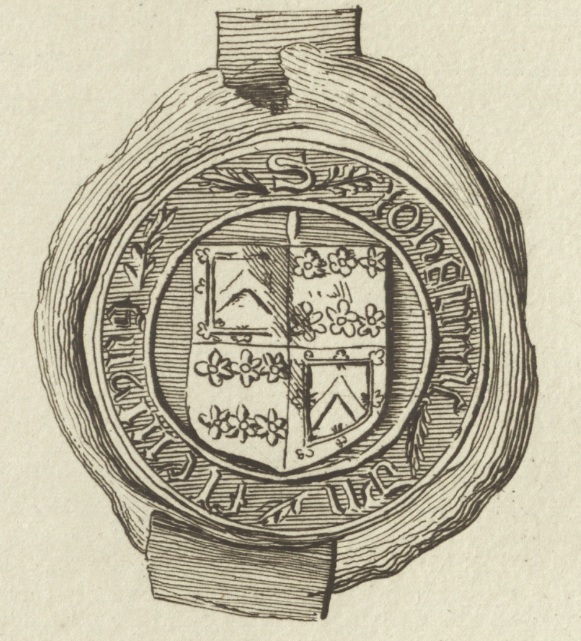
1518 John 2nd Lord

Birth
Vice-admiral John ("the Ambassador") Fleming, 2nd Lord Fleming, was born circa 1465.1
Parents
| Father | Sir Malcolm Fleming, of Monycabock (b. circa 1445, d. circa 1477) |
| Mother | Euphemia ("Elizabeth") Livingstone (b. circa 1445, d. circa 1493) |
Family life
Vice-admiral John ("the Ambassador") Fleming, 2nd Lord Fleming, and Euphame ("Lilias") Drummond were married circa 1492.1,2 He and Margaret Stewart were married circa 1508. She was married, but apparently without the sanction of the Church, before 12 March 1509 to John Fleming, 2nd Lord Fleming.
Lanarkshire history - He next espoused, about the year 1508, Margaret, daughter of Matthew, Earl of Levanax, and her he appears to have obtained by an act of forcible abduction (Pit Grim. Trials, I., 66).
But that's not right, because it was not him who raped her, it was John Fleming son of Boghall.1,3,2,4 He and Margaret Stewart were divorced on 17 December 1509 in Glasgow. They were divorced by the Archbishop of Glasgow. Grounds for the divorce were that she had been raped by John Fleming, son to Boghall. NO. Grounds were consanguinity. The document says that Lord Fleming raped her; it is not a reference to the rape by John F of Boghall.
The divorce charter - On Monday, the 17th of December, in the year 1509, by the indiction of the 13th pontificate of July 2nd, year 7th, and in the 22nd year of his reign: The most reverend father James of Glasgow, to the archbishopric of Glasgow, by the learned vigor of Louis of Saint Marcellus, cardinal presbyter, lord pope major penitentiary, directed to himself, has dispensated the first of John, lord Fleming, and Margaret Stewart, spouses, formerly knowing themselves to be of the fourth degree of consanguinity and of the fourth degree of affinity in this marriage, and ignorant of any other impediment existing between them, preventing them from being able to be matrimonially joined, having contracted their betrothal by words of future consanguinity, and having afterwards known each other many times carnally, and having afterwards come to the notice of the said archbishop, or his vicar general, and not of the two men of John and Margaret, which pertained to another fourth degree of affinity, by the said archbishopric or his vicar from the innocency, and after such divorce they have several times carnally separated knowing them; and upon the deposition of certain witnesses, it is certified that they will be taken; the same are absolved from the general sentence of excommunication which they have incurred for this reason, the guilt of incest and excommunications of this kind, and are therefore ordered to do penance for their guilt, and such other things as may be ordered by law, which, if they survive, shall perpetually grant to the other of them the hope of marriage; It is also stated that the said woman was raped by the same man, and that, because of the impediments of consanguinity and affinity of this kind, they could contract a new marriage between themselves, and after the contract had been lawfully concluded, she mercifully dispensed, according to the tenor of the said apostolic letters, that she would have borne a child and sufficient to leave the lawful ten months: And none of the said couples, fearing that the said letters would be surreptitious, from the fact that some of them themselves were third and third and fourth, the other one was fourth and a third and a fourth consanguinity and affinity) from the tribe which they were distant from, and that the other was distant third and third and another third, in which there was no mention of any other person, they obtained the first declamations. iiUin from the aforesaid petition, by virtue of which the same archbishop, according to the apostolic declaration, viz., the Clement of the Pope, declared the same to be valid as if the said third degree had been mentioned in the same distance: Matthew Earl of Lennox in the name of the said Margaret, and the same John Fleming in his own name, signed instruments: Acts in the palace of the said archbishop of Glasgow in Glasgow, at 3 o'clock in the afternoon, or thereabouts; witnesses, Masters Martin Rede, chancellor, Adam Culquhoun, canons of Glasgow, lord Alexander Cetoun knight, and Robert Burn.1,5,4 He and Agnes Somerville were married circa 1519.1,2
Lanarkshire history - He next espoused, about the year 1508, Margaret, daughter of Matthew, Earl of Levanax, and her he appears to have obtained by an act of forcible abduction (Pit Grim. Trials, I., 66).
But that's not right, because it was not him who raped her, it was John Fleming son of Boghall.1,3,2,4 He and Margaret Stewart were divorced on 17 December 1509 in Glasgow. They were divorced by the Archbishop of Glasgow. Grounds for the divorce were that she had been raped by John Fleming, son to Boghall. NO. Grounds were consanguinity. The document says that Lord Fleming raped her; it is not a reference to the rape by John F of Boghall.
The divorce charter - On Monday, the 17th of December, in the year 1509, by the indiction of the 13th pontificate of July 2nd, year 7th, and in the 22nd year of his reign: The most reverend father James of Glasgow, to the archbishopric of Glasgow, by the learned vigor of Louis of Saint Marcellus, cardinal presbyter, lord pope major penitentiary, directed to himself, has dispensated the first of John, lord Fleming, and Margaret Stewart, spouses, formerly knowing themselves to be of the fourth degree of consanguinity and of the fourth degree of affinity in this marriage, and ignorant of any other impediment existing between them, preventing them from being able to be matrimonially joined, having contracted their betrothal by words of future consanguinity, and having afterwards known each other many times carnally, and having afterwards come to the notice of the said archbishop, or his vicar general, and not of the two men of John and Margaret, which pertained to another fourth degree of affinity, by the said archbishopric or his vicar from the innocency, and after such divorce they have several times carnally separated knowing them; and upon the deposition of certain witnesses, it is certified that they will be taken; the same are absolved from the general sentence of excommunication which they have incurred for this reason, the guilt of incest and excommunications of this kind, and are therefore ordered to do penance for their guilt, and such other things as may be ordered by law, which, if they survive, shall perpetually grant to the other of them the hope of marriage; It is also stated that the said woman was raped by the same man, and that, because of the impediments of consanguinity and affinity of this kind, they could contract a new marriage between themselves, and after the contract had been lawfully concluded, she mercifully dispensed, according to the tenor of the said apostolic letters, that she would have borne a child and sufficient to leave the lawful ten months: And none of the said couples, fearing that the said letters would be surreptitious, from the fact that some of them themselves were third and third and fourth, the other one was fourth and a third and a fourth consanguinity and affinity) from the tribe which they were distant from, and that the other was distant third and third and another third, in which there was no mention of any other person, they obtained the first declamations. iiUin from the aforesaid petition, by virtue of which the same archbishop, according to the apostolic declaration, viz., the Clement of the Pope, declared the same to be valid as if the said third degree had been mentioned in the same distance: Matthew Earl of Lennox in the name of the said Margaret, and the same John Fleming in his own name, signed instruments: Acts in the palace of the said archbishop of Glasgow in Glasgow, at 3 o'clock in the afternoon, or thereabouts; witnesses, Masters Martin Rede, chancellor, Adam Culquhoun, canons of Glasgow, lord Alexander Cetoun knight, and Robert Burn.1,5,4 He and Agnes Somerville were married circa 1519.1,2
Children with Euphame ("Lilias") Drummond (b. circa 1467, d. after April 1502)
| Son | Sir Malcolm ("the Brave") Fleming, 3rd Lord Fleming+ (b. 14 January 1494, d. 10 September 1547) |
| Daughter | Elizabeth Fleming (b. circa 1501) |
Child
| Son | Reverend Malcolm Fleming, Prior of Whithorn (b. circa 1500, d. circa 30 March 1569) |
Child with Margaret Stewart (b. before 1492, d. after 1 May 1528)
| Son | James Fleming, Page of honour to the King (b. circa 1512, d. after 1532) |
Child with Agnes Somerville (b. circa 1470, d. after 29 January 1530)
| Daughter | Margaret Fleming (b. circa 1517) |
Titles
Working life
- Vice-admiral John ("the Ambassador") Fleming, 2nd Lord Fleming, served in the military as fought with the rebel forces against those of King James III in the Battle of Sauchie Burn on 11 June 1488 in Sauchieburn. The Battle of Sauchieburn was fought on 11 June 1488, at the side of Sauchie Burn, a stream about two miles (3 km) south of Stirling, Scotland. The battle was fought between the followers of King James III of Scotland and a large group of rebellious Scottish nobles including the future Alexander Home, 2nd Lord Home, who were nominally led by the king's 15-year-old son, James, Duke of Rothesay. James III was killed in the battle, and his son succeeded him as James IV.
Hunter -
Fleming again joined the discontented party — Angus, Hume, Bothwell, and others — who seized the young Prince, afterwards James IV. and proclaimed him King, declaring that his father, on several grounds, had forfeited his right to the crown. Both parties mustered their vassals, and an engagement took place on the 18th June 1488 at Sauchieburn, in which the King's forces were routed. The King fled from the field, and on descending a declivity at Beaton's Mill, .near Stirling, he was thrown from his horse, and, being encased in armour, was much hurt. He was conveyed to a bed in the miller's house, and was there murdered, and his body carried off by a person whose name remains unknown to this day.6,7 - He witnessed the military service of Sir Robert ("the Rebel") Fleming, of Cumbernauld, 1st Lord Fleming, after 11 June 1488 in Leith.8
- Vice-admiral John ("the Ambassador") Fleming, 2nd Lord Fleming, served in the military as Vice-Admiral of a fleet sent by James IV under command of the Earl of Arran, to assist the French in 1511. This venture ended in failure. Lord Fleming was captain of the "Margaret", named after the king's wife.
Hunter -
A war having been proclaimed between France and England, James IV. of Scotland, about the year 1511, was urged by the King of France to invade England. He refused to do so, on the ground that a bond of alliance existed between the English King and himself ; but he promised to send a reinforcement to the assistance of the French. He accordingly fitted out a fleet of considerable size, appointed Lord Hamilton Admiral, and Lord Fleming Vice-Admiral, and placed under their command a body of 10,000 men. The ship in which Fleming sailed was called the " Margaret," and the Admiral's ship was the " Micheall," which was built by James, and was the largest vessel in Scotland, being 248 feet long, and 46 feet over all. She carried 1400 men, and cost upwards of £40,000. This armament set sail ; but instead of directing its course to France, it approached the coast of Ireland, burnt the town of Carrickfergus and some of the neighbouring villages, and then returned to Scotland. The Admiral and his men landed at the town of Ayr, where they "played thamselves, and reposed be the space of fourtie dayes." The King, when he heard of their conduct, was in a terrible rage, and sent Sir Andrew Wood and several heralds to order Lord Hamilton to give up his command ; but his Lordship disregarded the King's authority, and having put his men on board, again set sail. The expedition was a complete failure, and apparently was one of the causes which induced James to muster a land army and march into England, where he lost his life on the disastrous field of Flodden.1,9,10 - He served in the military as served as captain of the Margaret and vice-admiral of the Scottish fleet of 38 ships in 1512 in Sea. The Margaret was one of 38 ships in the navy of James IV, having been built at Leith between 1505 and 1508 from timber cut in the forest of Darnaway. At the time she was built she was considerably larger than any other ship in the Scottish navy, but soon after she was superseded by a warship which was considerably larger again, the Michael.
The Margaret was repaired at Airth in 1512.[5] In November 1512 the Great Michael and the Margaret were at Blackness. James IV came aboard the Michael on St Andrew's day to hold an audience with the French ambassador, Charles de Tocque, sieur de la Mothe. The Auld Alliance of Scotland and France was confirmed.[6]
In the Spring of 1513, Margaret was refitted to be loaned to Louis XII of France. The English ambassador, Nicholas West described her preparation on 13 April 1513;
On Monday, I went to the New Haven, and ther lyeth the Margaret, a ship nighe of the burden of the Cryst of Lynn, and many men workying upon her, som setting on her mayn top, and som caulking her above water, for under water she was new tallowed.[7]
John, Lord Fleming, was Vice-Admiral on Margaret, second to the Earl of Arran, Lord Admiral on Michael. First the fleet burnt Carrickfergus and waited off Ayr before going to France. Robert Lindsay of Pitscottie believed that the fleet's delay provoked James IV to invade England.[8] Margaret was berthed at Dumbarton on her return with the Duke of Albany on 26 May 1515, after service in France. In July 1515, she was in the keeping of John Stewart of Ardgowan, with James. New docks were built for the two ships in September. Their guns were unloaded under the direction of Gavin Jardane and John Drummond, master-wright, and transported from Glasgow to Edinburgh.[9]
Clyde Naval - Naval Growth under James IV: The Margaret, though small compared to later Clyde-built ships, symbolized a period when Scotland began to develop its naval power. James IV was passionate about creating a Scottish navy, and The Margaret was likely used for both military and diplomatic purposes.
• Merchant Ventures: Ships like The Margaret helped to increase Scotland’s presence in overseas trade, facilitating commerce with Europe, especially France and the Low Countries. This period saw the growth of trade routes and economic expansion, with the Clyde playing a key role in connecting Scotland to international markets.
• Military Uses: While records are scarce, it’s likely that The Margaret served during the escalating tensions between Scotland and England in the early 16th century. King James IV was preparing for a potential war with England, which eventually culminated in the disastrous Battle of Flodden (1513), where James IV was killed. Many of Scotland’s naval and military resources were mobilized during this period, and it is possible that The Margaret was involved in this broader strategy.
Wiki James IV - The Margaret, built at Leith and launched in 1506, weighed around 600–700 tons, was armed with four falconets, a cannon and twenty-one other guns, and cost the king an estimated £8,000 — more than a quarter of his annual income.[75] The carrack Great Michael was the largest warship of its time.[76][77] Built at Newhaven and launched in 1511, it measured between 150 feet (46 m) and 180 feet (55 m) in length, weighed around 1,000 tons, and was supposed to have cost around £30,000.[77] Armed with twenty-four bronze cannons and three basilisks, it marked a shift in design as it was designed specifically to carry a main armament of heavy artillery.[76][78] The navy's core of four large ships (the Treasurer, the Margaret, the James and the Michael) were supported by a number of smaller craft and privately owned merchant ships.[74]11,12,13,14 - He served in the military as served as vice admiral of the Scottish fleet aboard the Margaret for the transportation of 3000 troops to France in 1513 in Sea.15
- On 5 December 1513 Vice-admiral John ("the Ambassador") Fleming, 2nd Lord Fleming, was occupied as Ambassador to France's King Louis XII in Perth. He had a commission under the Great Seal as ambassador to France, dated 5 December 1513, for receiving the sum of 100,000 francs French money from Louis xn., King of France, together with arms, and other warlike ammunition - Balfour Paul.
Lanarkshire - After his fall at Flodden, that Court despatched an embassy to the Estates of Scotland, proffering to send to their assistance the Duke of Albany, with stores and munitions of war. Having delivered this, their more immediate message, the envoys proceeded ''to show how it was desired by the Earl of Arran and Lord Fleming, being now lately in France, sent by the King's Grace of Scotland, whom God assoily, to serve the rmist Cristin King in his wars." This request was, however, refosed by the Parliament, who resolved to recall all the Scotchmen serving in France 1,16,17,18,19,10,20 - In 1514 Vice-admiral John ("the Ambassador") Fleming, 2nd Lord Fleming, was occupied as Privy Councillor.10
- In 1515 Vice-admiral John ("the Ambassador") Fleming, 2nd Lord Fleming, was occupied as recieved letters from the Lord Grovemor for keeping of the King's Grace, an appointment which he retained during the rest of his life.21
- In 1515 Vice-admiral John ("the Ambassador") Fleming, 2nd Lord Fleming, was occupied as Lord High Chamberlain.20
- He served in the military as was given charge of a garrison of 100 men at Hume Castle and another 40 men to effect repairs on 22 August 1515 in Hume Castle. Hume Castle - Wikipedia
In August 1515 Regent Albany imprisoned members of the Hume family at Dunfermline, with Adam Tinmo, the Constable of Hume Castle. At this time, Scotland's Governor Regent Albany was planning to bring an army against the Hume family on the Scottish borders. Albany captured Hume Castle, but according to a report by Cardinal Wolsey's chaplain, William Frankelayn, Chancellor of Durham, Lord Hume, Lord Chamberlain, retook the castle on 26 August 1515, and kept Albany's captain, Lord Fleming's uncle, prisoner. Lord Hume then slighted his own castle, razed the walls, "and dammed the well for ever more."[2]22 - On 21 January 1517 Vice-admiral John ("the Ambassador") Fleming, 2nd Lord Fleming, was occupied as Lord Chamberlain of Scotland. Hunter -
Lord Fleming, by his zeal and abilities, commended himself so much to the favour and countenance of the new Regent, that he appointed him to the office of Lord Chamberlain in 1516, on the execution of Lord Chamberlain Home, for the cowardly and unpatriotic part which he had played at the Battle of Flodden. The office of Lord Chamberlain, or Treasurer, which remained in the family of Fleming for several generations, was one of great trust and dignity. It required the person who held it to be constantly resident at court, to have charge of the household of the sovereign, and to disburse all sums that were necessary for the maintenance of the royal establishment. The accounts of the Treasurers of Scotland have been preserved from a remote period, and are extremely interesting, as well as useful, in showing the movements of the court, and the manners and customs of the times. Lord Fleming, so far as we know, first signed himself " Camerarius Scotise," in a letter of date 7th October 1517, which was sent by the Regent and Parliament to Henry VIII. of England, regarding a suspension of hostilities between the two kingdoms.
But he must have held the office before this as Q Marg refers to him as Lord Chancellor in earlier correspondence with Henry VIII.
Pinkerton - To ftrengthen his influence Albany now conferred the oflSce of chamberlain, the fccond ki the kingdom, upon lord Fleming * t a peer warmly attached to him, but of a profligate and languinary character.1,23,24,25,26,21,27,28 - On 3 October 1517 Vice-admiral John ("the Ambassador") Fleming, 2nd Lord Fleming, was occupied as was chosen to sit on the secret Council.29
- On 7 March 1520 Vice-admiral John ("the Ambassador") Fleming, 2nd Lord Fleming, was occupied as Ambassador to Francis I, King of France. On 7 March 1519 he had another commission under the Great Seal as ambassador to Francis i., King of France, for managing certain matters committed to him for the common good, and specially to desire that King to send home John, Duke of Albany, the King's tutor, to be Governor of the kingdom of Scotland, in which mission he was so far successful, returning in the retinue of the Regent in November 1521.
Dr Kinghorn, the Danish Ambassador, was, according to the custom of the time, allowed £80 towards his expenses by the Chancellor and Lords of Council/ We learn from other writers as well as from the Accounts that the Abbot and Lord Fleming the Chamberlain went along with Kinghorn to France before his return to Denmark.^ It was part of their mission to procure the return of Albany, and to concert measures along with him and the French King in favour of Christiern. That the scarcity of corn in Scotland was considerable may perhaps be inferred from three chalders of meal being the only provision for the soldiers which appears in the account. - RSRS
He was paid 8/-/- for this embassy.
Maitland -
Note. — Since the preceding papers have been printed off, there has been found in an old inventory of the wigton writs, a Commission under the Great Seal of James V. to John Lord Fleming, (treat Chamberlain of the Ivingdom, as Ambassador to Francis I. for managing certain affairs entrusted to him, and in particular to desire that King to send home the Duke of Albany to be Regent of Scotland. This document, dated 7 March 1.510-20, would have illustrated No. I. of the preceding papers, and confirmed the conjectures in the preface, had it been recovered in time. It is to be hoped that tlie liberality of Admiral Fleming will on a future occasion enable further selections from the very curious documents which that Inventory contains, to be laid before the Club.1,30,31,32,33,34,35 - After 1521 Vice-admiral John ("the Ambassador") Fleming, 2nd Lord Fleming, was occupied as Companion to the King. By Parliament he was appointed one of the three noblemen to abide with the King, each for three months1
- In 1522 Vice-admiral John ("the Ambassador") Fleming, 2nd Lord Fleming, was occupied as Chamberlain of Scotland. He is mentioned in the accounts in relation to an amount of 176/-/-.36
- On 1 August 1524 Vice-admiral John ("the Ambassador") Fleming, 2nd Lord Fleming, was occupied as resigned the office of Lord Chamberlain, as did many senior office holders.37
Property
Vice-admiral John ("the Ambassador") Fleming, 2nd Lord Fleming, possessed owned the fishery of Bothkennar CA 1500–1502 in Bothkennar.38,39,4041 He possessed defended, through his legal guardian John, Lord Drummond, the feur of the Barony of Thankerton from an action by John Lord Kennedy on 3 March 1489 in Barony of Thankerton.42 He possessed he was served heir to his brother for Auchtermony on 30 March 1491 in Auchtermony.6 He possessed had sasine of Auchtirmony and Abbatis Kers (Kerse abbey) in 1492 in Auchtermony.43 He possessed had sasine of Dunbull in Perth in 1492 in Dunbulls.43 He possessed had sasine of Lour in Forfar in 1492 at Forfar in Lour.44 He possessed had sasine of Lenzie (Dumbarton) and Bigar (Lanark) in 1492 in Lenzie and Biggar.45 He possessed had a precept of clare constat from George Sinclair, Baron of Harbertshire, son and apparent heir of Sir Oliver Sinclair of Roslin, Knight, with consent of his said father, for infefting the said John as heir to his grandfather Robert, Lord Fleming on 31 March 1492 in Castlerankine and Seymores and Ballinkeir and others in the county of Stirling.1 He possessed was served heir to his brother David, in the lands of Dunbulls on 2 May 1492 at Perth in Dunbulls.6,46 He possessed was required by a decree of the Lords of Council that, as heir to the deceased David Fleming, and Malcolm Fleming his father, he should warrant and keep to George, Earl of Huntly, these lands on 22 June 1492 in Elrig and others in the Barony of Monycabo.1,47 He possessed was served heir to his brother at an inquest in 1495.48 He possessed had a charter under the Great Seal, on the resignation of John Drummond, to himself and Euphame Drummond his wife on 14 May 1496 in Thankerton.1,2,49,50 He possessed was served heir to his brother Sir David in the baronies of Lenzie and Cumbernauld on 18 April 1497 in Lenzie and Cumbernauld Baronies.1,51 He possessed was served heir to his brother Sir David on 26 April 1497 in Biggar.1 He possessed was burdened with an assessment of 621/13/4 and 40 merks for five years of unpaid taxes on the barony of Lenzie and the forest of Cummyrnauld on 5 May 1497 in Lenzie and Cumbernauld Baronies.52,53 He possessed was asked by notarial instrument to enfest John Lord Kennedy in the Barony of Thankerton on 15 January 1499 in Barony of Thankerton.54,42 He possessed was mentioned as a vendor of Newtown, along with John Lord Yester in a charter of the king in favour of James Hamilton on 8 March 1499 at in the barony of Stravaan, Lanarkshire, in Newtown.55 He possessed had sasine of Monycabock in 1500 in Monycabock (later Newmachar), Aberdeenshire.56 He possessed discharged a debt of 200 merks owed to Janet Hepburn daughter of John Hepburn of Rowiestoun on 1 June 1500.57 He possessed was, on a brieve from Chancery, vested in the lands in which his grandfather Lord Fleming had died last vest and seised on 30 June 1500.57 He possessed was ordered by the king to pay John Lord Drummond 100 marks or forfeit 5 merks of land in the eastern half of Dunbulls on 18 March 1501 in Dunbulls.58 He possessed had sasine in Overmenzean, Glenrusco and Olivercastle in Peebles in 1502 in Overmenzean, Glenrusco and Olivercastle.59 He possessed granted a charter in his lands of Nether Auchinreoch in the barony of Auchtermony to William Fleming of Bord in exchange for Menzean in the barony of Oliver Castle, sold by Bord on 3 January 1502 in Nether Auchinreoch in the barony of Auchtermony.601 He possessed had sasine in Overkingledoors in Peebles in 1506 at Peebles in Overkingledoors.61 He possessed had a Crown charter by James IV directed to the sheriff and bailies of Peebles and others for recognition of the lands of Overmenzean and half of Glenrusco on 17 February 1506 in Overmenzean and Glenrusco.621 He possessed lost a legal battle with John Lord Hay of Yester over warrandice on these lands on 26 April 1507 in Oliver Castle.63 He possessed had a charter of the king to John Lord Fleming and his wife Margaret Stewart for the baronies of Biggar and Thankertoun for them and their heirs male on 12 March 1508 in Biggar and Thankertoun Baronies.64,2,64 He possessed forfeited Overmenzean to the king due to alienating of its greater part without consent on 9 June 1508 in Overmenzean.65 He possessed had a Crown charter of the barony of Monycabo in Aberdeenshire on 8 May 1509.1 He possessed had sasine of Gothrastoun in Forfar in 1510 at Forfar in Gothraston.66 He possessed resigned these lands for royal grant of sasine to his wife Margaret Stewart on 12 March 1510 in Baronies of Biggar and Thankerton.67 He possessed seems to have sold Gothraston to Andrew Lord Gray on 15 January 1511 at Forfar in Gothraston.68 He possessed forfeited Oliver Castle and hald the lands of Glenrusco to the king due to the alienation of the greater part of it without consent on 2 February 1512 in Oliver Castle and Glenrusco.69 He possessed he had a charter from King James V, on the resignation of Margaret Stewart, his reputed wife, of the baronies of Biggar and Thankertoun on 26 October 1515 in Biggar and Thankertoun Baronies.1,492,70 He possessed recieved the benefice of the parish of Thankerton on the resignation of the commendator of Kelso circa 1516 at Parish in Thankerton.7121 He possessed gave a receipt to Archibald Douglas Earl of Angus for a certain sum received as Great Chamberlain of Scotland on 2 April 1521 in Rhoan, France.72731,2174
Death
Vice-admiral John ("the Ambassador") Fleming, 2nd Lord Fleming, died assassinated by John Tweedie of Drumelzier, James Tweedie his son, and others on 1 November 1524 at age ~59. In 1524, John Fleming, 2nd Lord Fleming, was attacked and killed by a party of men led by John Tweedie of Drumelzier while hawking in the vicinity of the village. The feud between the Tweedies and the Flemings had its roots in Tweedie's desire to secure the marriage of Catherine Frizzel, heiress of Freud in Tweedsmuir, to his eldest son, James. Catherine may already have been married to one of Lord Fleming's illegitimate sons (Malcolm) but she was surrendered to the Tweedies and apparently married to James Tweedie. Three surviving members of Fleming's party were held captive by the Tweedies until Catherine was delivered to Drumelzier. In 1530, in an attempt to resolve the dispute, the Lords of Council ruled that John Tweedie should fund a chaplaincy in Biggar to say masses for the soul of the murdered Lord Fleming. Malcolm Fleming became a priest and was later Prior of Whithorn.
Hunter -
In the unsettled state of the country many disorders arose, and many barbarities were perpetrated. One of the most remarkable of these was the murder of Lord Fleming, on the 1st of November 1524, by the Tweedies of Drummelzier and a band of accomplices.
Hunter 503 -
John Lord Fleming, it appears, also held at that time the ward and marriage of the Fruid estate, and was anxious that Catherine the heiress would marry one of his sons, whose name was Malcolm, — not his legitimate son and heir of that name, but another, most likely illegitimate. On the other hand, the Tweedies were determined that she should wed no other than James Tweedie, eldest son and heir of John Tweedie of Drummelzier. From casual expressions in some of the old documents on the subject, it would seem that she had actually been married to Malcolm Fleming as she styles him her husband. This, no doubt, fired the indignation of the Tweedies. Having got notice that Lord Fleming was to enjoy the sport of hawking over his lands in Kilbucho, Glenholm, and Drummelzier, they and their confederates assembled to the number evidently of not fewer than forty or fifty men, and waylaid his lordship and his small retinue among the hills. When the parties met, a hot altercation ensued, and in the course of it young Tweedie of Drummekier drew his sword and slew Lord Fleming on the spot.
The party in attendance on Lord Fleming was small, consisting merely of his son and a few domestics. After the
slaughter of his Lordship, the Tweedies plundered his servants and carried off young Fleming, and kept him in confinement in the Place of Drummelzier.
Watson says that John Lord Fleming had the ward of her marriage.1,75,76,21,77,78,79,20,80,81 He had his estate probated after 1 November 1524.81
Hunter -
In the unsettled state of the country many disorders arose, and many barbarities were perpetrated. One of the most remarkable of these was the murder of Lord Fleming, on the 1st of November 1524, by the Tweedies of Drummelzier and a band of accomplices.
Hunter 503 -
John Lord Fleming, it appears, also held at that time the ward and marriage of the Fruid estate, and was anxious that Catherine the heiress would marry one of his sons, whose name was Malcolm, — not his legitimate son and heir of that name, but another, most likely illegitimate. On the other hand, the Tweedies were determined that she should wed no other than James Tweedie, eldest son and heir of John Tweedie of Drummelzier. From casual expressions in some of the old documents on the subject, it would seem that she had actually been married to Malcolm Fleming as she styles him her husband. This, no doubt, fired the indignation of the Tweedies. Having got notice that Lord Fleming was to enjoy the sport of hawking over his lands in Kilbucho, Glenholm, and Drummelzier, they and their confederates assembled to the number evidently of not fewer than forty or fifty men, and waylaid his lordship and his small retinue among the hills. When the parties met, a hot altercation ensued, and in the course of it young Tweedie of Drummekier drew his sword and slew Lord Fleming on the spot.
The party in attendance on Lord Fleming was small, consisting merely of his son and a few domestics. After the
slaughter of his Lordship, the Tweedies plundered his servants and carried off young Fleming, and kept him in confinement in the Place of Drummelzier.
Watson says that John Lord Fleming had the ward of her marriage.1,75,76,21,77,78,79,20,80,81 He had his estate probated after 1 November 1524.81
Citations
- [S28] Sir James Balfour Paul, The Scots Peerage, vol viii, Fleming Earl of Wigtown pages 519 - 558

- [S83] George Vere Irving, The upper ward of Lanarkshire described and delineated, vol i, p 315
- [S29] Various, Various, "WikiTree," pedigree, Commons, WikiTree (https://www.wikitree.com/wiki: accessed ), ., online; 9 November 2023; Margaret Stewart (abt. 1492 - 1560) at https://www.wikitree.com/wiki/Stewart-1344
- [S87] Joseph Bain, Rental book of the diocese of Glasgow, vol i, p 452-53
- [S87] Joseph Bain, Rental book of the diocese of Glasgow, vol ii, p 311-312
- [S29] Various, Various, "WikiTree," pedigree, Commons, WikiTree (https://www.wikitree.com/wiki: accessed ), ., online; 9 November 2023; John (Fleming) Fleming Second Lord Fleming (1465 - abt. 1524) at https://www.wikitree.com/wiki/Fleming-181
- [S5] William Hunter, Biggar and the House of Fleming, p 494
- [S84] John Pinkerton, The History of Scotland, vol ii, p 3
- [S44] Scotland Court of Exchequer, Rotuli scaccarii regum Scotorum, vol 13, p clxxxv
- [S5] William Hunter, Biggar and the House of Fleming, p 496
- [S84] John Pinkerton, The History of Scotland, vol ii, p 76
- [S2] Various contributors, Various contributors, "Wikipaedia," database, Commons, Wikipaedia (https://en.wikipedia.org/wiki/: accessed ), ., Scottish warship Margaret at https://en.wikipedia.org/wiki/Scottish_warship_Margaret
- [S2] Various contributors, Various contributors, "Wikipaedia," database, Commons, Wikipaedia (https://en.wikipedia.org/wiki/: accessed ), ., Royal Scots Navy at https://en.wikipedia.org/wiki/Royal_Scots_Navy
- [S94] David O'Neill, David O'Neill, The Clyde Naval Heritage Project, Clyde Naval (https://clydenaval.org/ : accessed ), ., viewed; 11 April 2025; The Margaret at https://clydenaval.org/the-margaret/
- [S84] John Pinkerton, The History of Scotland, vol ii, p 89
- [S17] Francis J Grant (Ed), Charter Chest of the Earldom of Wigtown, Charter 59
- [S44] Scotland Court of Exchequer, Rotuli scaccarii regum Scotorum, vol 14, p lxxvii
- [S51] Raphael Holinshed, Holinshed's Chronicle, Scotland, vol v, p 483, https://archive.org/details/chroniclesofengl05holiuoft/page/483/mode/2up
- [S83] George Vere Irving, The upper ward of Lanarkshire described and delineated, vol i, p 313
- [S21] George Crawford, The Peerage of Scotland, p 491-499, Fleming, Earl of Wigtown
- [S83] George Vere Irving, The upper ward of Lanarkshire described and delineated, vol i, p 314
- [S136] Robert Kerr Hannay, Acts of the Lords of Council in Public Affairs, p 54
- [S44] Scotland Court of Exchequer, Rotuli scaccarii regum Scotorum, vol 14, p xliv
- [S51] Raphael Holinshed, Holinshed's Chronicle, Scotland, vol v, p 488, https://archive.org/details/chroniclesofengl05holiuoft/page/488/mode/2up
- [S55] Thomas Rymer, Foedera, vol vi, p 138
- [S68] KM Brown and others, Records of the Parliaments of Scotland to 1707, A1517/10/1
- [S84] John Pinkerton, The History of Scotland, vol ii, p 164
- [S5] William Hunter, Biggar and the House of Fleming, p 498
- [S136] Robert Kerr Hannay, Acts of the Lords of Council in Public Affairs, p 105
- [S17] Francis J Grant (Ed), Charter Chest of the Earldom of Wigtown, Charter 63
- [S44] Scotland Court of Exchequer, Rotuli scaccarii regum Scotorum, vol 14, p cxxxv
- [S44] Scotland Court of Exchequer, Rotuli scaccarii regum Scotorum, vol 14, p cxlii
- [S44] Scotland Court of Exchequer, Rotuli scaccarii regum Scotorum, vol 14, p 463
- [S5] William Hunter, Biggar and the House of Fleming, p 499
- [S121] A McDonald and others, Miscellany of the Maitland Club, vol ii, p 494
- [S44] Scotland Court of Exchequer, Rotuli scaccarii regum Scotorum, vol 14, p 462
- [S136] Robert Kerr Hannay, Acts of the Lords of Council in Public Affairs, p 204
- [S44] Scotland Court of Exchequer, Rotuli scaccarii regum Scotorum, vol 11, p 410
- [S44] Scotland Court of Exchequer, Rotuli scaccarii regum Scotorum, vol 12, p 638
- [S44] Scotland Court of Exchequer, Rotuli scaccarii regum Scotorum, vol 12, p 142
- [S58] Edinburgh, National Records of Scotland, "Online Catalogue," National Records of Scotland (https://catalogue.nrscotland.gov.uk/nrsonlinecatalogue: accessed ), ., viewed; 11 September 2025; GD45/16/545, 7 Jul 1470, Instrument of ratification by Euphemia of Levingstoune, wife of Malcolm Flemying
- [S58] Edinburgh, National Records of Scotland, "Online Catalogue," National Records of Scotland (https://catalogue.nrscotland.gov.uk/nrsonlinecatalogue: accessed ), ., viewed; 22 September 2025; GD25/1/154, 3 Mar 1489, Instrument bearing that John Lord Kennedy compeared before James Lord Hamilton Sheriff of the County of Lanark
- [S44] Scotland Court of Exchequer, Rotuli scaccarii regum Scotorum, vol 10, p 766
- [S44] Scotland Court of Exchequer, Rotuli scaccarii regum Scotorum, vol 10, p 767
- [S44] Scotland Court of Exchequer, Rotuli scaccarii regum Scotorum, vol 10, p 772
- [S83] George Vere Irving, The upper ward of Lanarkshire described and delineated, vol ii, p 294
- [S135] Joseph Robertson and George Grub, Collections for a history of the Shires of Aberdeen and Banff, p 235-236
- [S83] George Vere Irving, The upper ward of Lanarkshire described and delineated, vol i, p 294
- [S83] George Vere Irving, The upper ward of Lanarkshire described and delineated, vol i, p 478
- [S43] Scotland Court of Exchequer, Registrum Magni Sigilli Regum Scotorum, vol ii, 1424-1513, ch 2310, p 490
- [S17] Francis J Grant (Ed), Charter Chest of the Earldom of Wigtown, Charter 53
- [S44] Scotland Court of Exchequer, Rotuli scaccarii regum Scotorum, vol 11, p 342*
- [S44] Scotland Court of Exchequer, Rotuli scaccarii regum Scotorum, vol 11, p 344*
- [S58] Edinburgh, National Records of Scotland, "Online Catalogue," National Records of Scotland (https://catalogue.nrscotland.gov.uk/nrsonlinecatalogue: accessed ), ., viewed; 22 September 2025; GD25/1/168, 15 Jan 1499, Instrument bearing that John Lord Kennedy asked and required John Lord Fleming
- [S43] Scotland Court of Exchequer, Registrum Magni Sigilli Regum Scotorum, vol ii, 1424-1513, ch 2481, p 528
- [S44] Scotland Court of Exchequer, Rotuli scaccarii regum Scotorum, vol 11, p 465
- [S17] Francis J Grant (Ed), Charter Chest of the Earldom of Wigtown, Charter 55
- [S43] Scotland Court of Exchequer, Registrum Magni Sigilli Regum Scotorum, vol ii, 1424-1513, ch 2575, p 547
- [S44] Scotland Court of Exchequer, Rotuli scaccarii regum Scotorum, vol 12, p 711
- [S17] Francis J Grant (Ed), Charter Chest of the Earldom of Wigtown, Charter 56-7
- [S44] Scotland Court of Exchequer, Rotuli scaccarii regum Scotorum, vol 12, p 719
- [S58] Edinburgh, National Records of Scotland, "Online Catalogue," National Records of Scotland (https://catalogue.nrscotland.gov.uk/nrsonlinecatalogue: accessed ), ., viewed; 22 September 2025; GD32/11/1, 17/2/1506, Crown charter by James IV
- [S58] Edinburgh, National Records of Scotland, "Online Catalogue," National Records of Scotland (https://catalogue.nrscotland.gov.uk/nrsonlinecatalogue: accessed ), ., viewed; 24 September 2025; GD25/2/26, 9 Jul 1511, Extract Decreet of Transference whereby decree of 26 April 1507 in favour of John, Lord Hay of Yester
- [S43] Scotland Court of Exchequer, Registrum Magni Sigilli Regum Scotorum, vol ii, 1424-1513, ch 3325, p 710
- [S43] Scotland Court of Exchequer, Registrum Magni Sigilli Regum Scotorum, vol ii, 1424-1513, ch 3241, p 692
- [S44] Scotland Court of Exchequer, Rotuli scaccarii regum Scotorum, vol 13, p 662
- [S58] Edinburgh, National Records of Scotland, "Online Catalogue," National Records of Scotland (https://catalogue.nrscotland.gov.uk/nrsonlinecatalogue: accessed ), ., viewed; 22 September 2025; GD220/6/1961, 12 Mar 1509/1510, Precept under quarter seal of sasine in favour of Margaret Stewart
- [S43] Scotland Court of Exchequer, Registrum Magni Sigilli Regum Scotorum, vol ii, 1424-1513, ch 3737, p 811
- [S43] Scotland Court of Exchequer, Registrum Magni Sigilli Regum Scotorum, vol ii, 1424-1513, ch 3692, p 799
- [S43] Scotland Court of Exchequer, Registrum Magni Sigilli Regum Scotorum, vol iii, ch 50, p. 11, xix. 81
- [S83] George Vere Irving, The upper ward of Lanarkshire described and delineated, vol i, p 476
- [S17] Francis J Grant (Ed), Charter Chest of the Earldom of Wigtown, Charter 65
- [S29] Various, Various, "WikiTree," pedigree, Commons, WikiTree (https://www.wikitree.com/wiki: accessed ), ., online; 9 November 2023; Malcolm Fleming (abt. 1505 - 1568) at https://www.wikitree.com/wiki/Fleming-3863
- [S58] Edinburgh, National Records of Scotland, "Online Catalogue," National Records of Scotland (https://catalogue.nrscotland.gov.uk/nrsonlinecatalogue: accessed ), ., viewed; 25 September 2025; GD25/2/44, 4 Jul 1526, Extract Decreet in favour of Agnes, Lady Flemyng, against Malcolm, Lord F., for implementing specified terms of her marriage contract of 28 November 1518 with John, Lord F.
- [S2] Various contributors, Various contributors, "Wikipaedia," database, Commons, Wikipaedia (https://en.wikipedia.org/wiki/: accessed ), ., online; 10 November 2023; Drumelzier at Drumelzier
- [S44] Scotland Court of Exchequer, Rotuli scaccarii regum Scotorum, vol 15, p lxxii
- [S84] John Pinkerton, The History of Scotland, vol ii, p 249
- [S84] John Pinkerton, The History of Scotland, vol ii, p 430
- [S5] William Hunter, Biggar and the House of Fleming, p 500
- [S132] Thomas Watson, Kirkintilloch, p 17
- [S58] Edinburgh, National Records of Scotland, "Online Catalogue," National Records of Scotland (https://catalogue.nrscotland.gov.uk/nrsonlinecatalogue: accessed ), ., viewed; 24 September 2025; GD156/46/4, 1524, Retour - Malcolm Fleming as Heir of John, Lord Fleming
| Context | Ch forebears (#1) Ch forebears (#2) Ch forebears (#3) Ch forebears (#4) Ch forebears (#5) |
| Last Edited | 25 September 2025 |