FlemingClans.com

"The Fleming Clan of Scotland: a genealogical history" - coming in late 2026!
Person Page 393
Mary Stewart, Queen of Scots
b. 8 December 1542, d. 8 February 1587
Person Exhibits
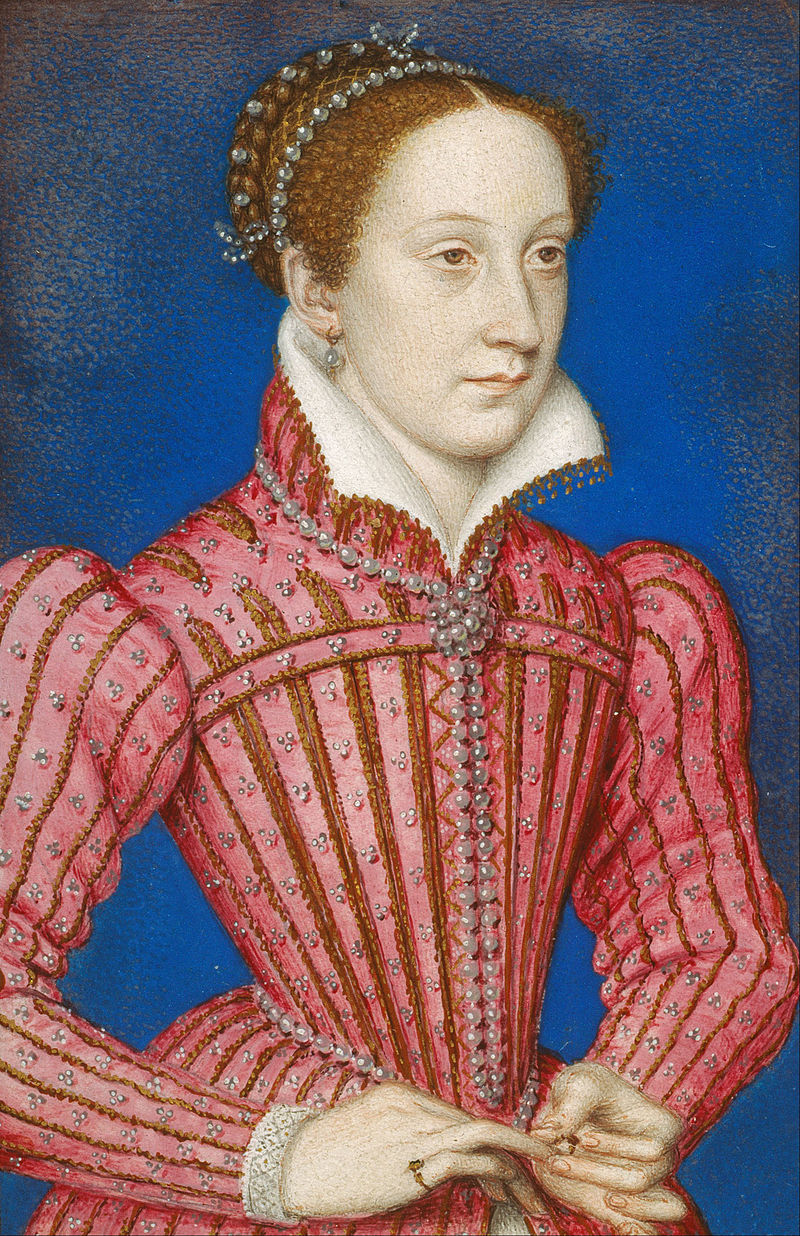
Queen Mary of Scots
Birth
Mary Stewart, Queen of Scots, was born on 8 December 1542 in Linlithgow Palace.1
Parents
| Father | King James Stewart, V of Scotland (b. 10 April 1512, d. 14 December 1542) |
| Mother | Mary ("Queen Dowager"), of Guise (b. 22 November 1515, d. 11 June 1560) |
Family life
Mary Stewart, Queen of Scots, and King Francis, II of France, were married on 24 April 1558 at Notre Dame Cathedral in Paris. The services of Lady Fleming being no longer required about the person of the Queen, she returned to her own country in 1555, and most likely took up her residence at Boghall Castle, as assigned to her by her husband. Her daughter Mary, however, remained with the Queen as one of her maids of honour, and no doubt was present at all those amusements and festivities in which it is said the Queen so largely participated, during her abode in France. She would be one of her bridesmaids on the occasion of her marriage to the Dauphin, and she would be called on to condole with her when that young monarch was laid in a premature grave2 She and Henry ("7G grandson of David Fleming of Biggar and Cumbernauld") Stewart, Lord Darnley, were married on 29 July 1565 in Holyrood Palace. They married at Holyrood Palace on 29 July 1565, even though both were Catholic and a papal dispensation for the marriage of first cousins had not been obtained.
English statesmen William Cecil and the Earl of Leicester had worked to obtain Darnley's licence to travel to Scotland from his home in England.[92] Although her advisors had brought the couple together, Elizabeth felt threatened by the marriage because as descendants of her aunt, both Mary and Darnley were claimants to the English throne.[93] Their children, if any, would inherit an even stronger, combined claim.[94] Mary's insistence on the marriage seems to have stemmed from passion rather than calculation; the English ambassador Nicholas Throckmorton stated "the saying is that surely she [Queen Mary] is bewitched",[95] adding that the marriage could only be averted "by violence".[96] The union infuriated Elizabeth, who felt the marriage should not have gone ahead without her permission, as Darnley was both her cousin and an English subject.[97]
Mary's marriage to a leading Catholic precipitated Mary's half-brother, the Earl of Moray, to join with other Protestant lords, including Lords Argyll and Glencairn, in open rebellion.[98] Mary set out from Edinburgh on 26 August 1565 to confront them. She carried a pistol, known as a "dagg", on her saddle.[99] On the 30th, Moray entered Edinburgh but left soon afterwards, having failed to take the castle. Mary returned to Edinburgh the following month to raise more troops.[100] In what became known as the Chaseabout Raid, Mary with her forces and Moray with the rebellious lords roamed around Scotland without ever engaging in direct combat. Mary's numbers were boosted by the release and restoration to favour of Lord Huntly's son and the return of James Hepburn, 4th Earl of Bothwell, from exile in France.[101] Unable to muster sufficient support, Moray left Scotland in October for asylum in England.[102] Mary broadened her privy council, bringing in both Catholics (Bishop of Ross John Lesley and Provost of Edinburgh Simon Preston of Craigmillar) and Protestants (the new Lord Huntly, Bishop of Galloway Alexander Gordon, John Maxwell of Terregles and Sir James Balfour).[103]
In February 1566, Bothwell married Lady Jean Gordon, daughter of the 4th Earl of Huntly and sister of Sir John Gordon and the 5th Earl of Huntly.[1] They were divorced on 7 May 1567, citing his adultery with her servant Bessie Crawford as cause.[2] He married Mary, Queen of Scots, eight days later.1 James ("Lord Bothwell") Hepburn, 4th Earl Bothwell and 1st Duke Orkney, and she were married on 24 April 1567 at Dunbarton Castle in Dunbarton. On 24 April, while Mary was on the road from Linlithgow Palace to Edinburgh, Bothwell suddenly appeared with 800 men. He assured her that danger awaited her in Edinburgh, and told her that he proposed to take her to his castle at Dunbar, out of harm's way. She agreed to accompany him and arrived at Dunbar at midnight. There, Mary was taken prisoner by Bothwell and allegedly raped by him to secure marriage to her and the crown (though whether she was his accomplice or his unwilling victim remains a controversial issue). On 12 May the Queen created him Duke of Orkney and Marquess of Fife at Holyrood.[8]
On 15 May they were married in the Great Hall at Holyrood, according to Protestant rites officiated by Adam Bothwell, Bishop of Orkney and John Craig.[9] Mary was married in mourning clothes,[10] described as "dule weed".[11] According to William Drury, an English commander at Berwick, there were only a few witnesses who heard a sermon the palace's chamber of presence. The French ambassador, Philibert du Croc did not attend the Duke's creation or the wedding.[12] Mary gave her new husband a fur lined night-gown.[13] There were few festivities until two weeks after the wedding, when there was a triumph and tilt and Bothwell "ran at the ring" at Leith.[14][15]
Originally, Mary believed that many nobles supported her marriage, but relations quickly soured between the newly elevated Bothwell (created Duke of Orkney) and his former peers and the marriage proved to be deeply unpopular. Catholics considered the marriage unlawful since they did not recognise Bothwell's divorce or the validity of the Protestant service. Both Protestants and Catholics were shocked that Mary should marry the man accused of murdering her husband.[138] The marriage was tempestuous, and Mary became despondent.[139]3
English statesmen William Cecil and the Earl of Leicester had worked to obtain Darnley's licence to travel to Scotland from his home in England.[92] Although her advisors had brought the couple together, Elizabeth felt threatened by the marriage because as descendants of her aunt, both Mary and Darnley were claimants to the English throne.[93] Their children, if any, would inherit an even stronger, combined claim.[94] Mary's insistence on the marriage seems to have stemmed from passion rather than calculation; the English ambassador Nicholas Throckmorton stated "the saying is that surely she [Queen Mary] is bewitched",[95] adding that the marriage could only be averted "by violence".[96] The union infuriated Elizabeth, who felt the marriage should not have gone ahead without her permission, as Darnley was both her cousin and an English subject.[97]
Mary's marriage to a leading Catholic precipitated Mary's half-brother, the Earl of Moray, to join with other Protestant lords, including Lords Argyll and Glencairn, in open rebellion.[98] Mary set out from Edinburgh on 26 August 1565 to confront them. She carried a pistol, known as a "dagg", on her saddle.[99] On the 30th, Moray entered Edinburgh but left soon afterwards, having failed to take the castle. Mary returned to Edinburgh the following month to raise more troops.[100] In what became known as the Chaseabout Raid, Mary with her forces and Moray with the rebellious lords roamed around Scotland without ever engaging in direct combat. Mary's numbers were boosted by the release and restoration to favour of Lord Huntly's son and the return of James Hepburn, 4th Earl of Bothwell, from exile in France.[101] Unable to muster sufficient support, Moray left Scotland in October for asylum in England.[102] Mary broadened her privy council, bringing in both Catholics (Bishop of Ross John Lesley and Provost of Edinburgh Simon Preston of Craigmillar) and Protestants (the new Lord Huntly, Bishop of Galloway Alexander Gordon, John Maxwell of Terregles and Sir James Balfour).[103]
In February 1566, Bothwell married Lady Jean Gordon, daughter of the 4th Earl of Huntly and sister of Sir John Gordon and the 5th Earl of Huntly.[1] They were divorced on 7 May 1567, citing his adultery with her servant Bessie Crawford as cause.[2] He married Mary, Queen of Scots, eight days later.1 James ("Lord Bothwell") Hepburn, 4th Earl Bothwell and 1st Duke Orkney, and she were married on 24 April 1567 at Dunbarton Castle in Dunbarton. On 24 April, while Mary was on the road from Linlithgow Palace to Edinburgh, Bothwell suddenly appeared with 800 men. He assured her that danger awaited her in Edinburgh, and told her that he proposed to take her to his castle at Dunbar, out of harm's way. She agreed to accompany him and arrived at Dunbar at midnight. There, Mary was taken prisoner by Bothwell and allegedly raped by him to secure marriage to her and the crown (though whether she was his accomplice or his unwilling victim remains a controversial issue). On 12 May the Queen created him Duke of Orkney and Marquess of Fife at Holyrood.[8]
On 15 May they were married in the Great Hall at Holyrood, according to Protestant rites officiated by Adam Bothwell, Bishop of Orkney and John Craig.[9] Mary was married in mourning clothes,[10] described as "dule weed".[11] According to William Drury, an English commander at Berwick, there were only a few witnesses who heard a sermon the palace's chamber of presence. The French ambassador, Philibert du Croc did not attend the Duke's creation or the wedding.[12] Mary gave her new husband a fur lined night-gown.[13] There were few festivities until two weeks after the wedding, when there was a triumph and tilt and Bothwell "ran at the ring" at Leith.[14][15]
Originally, Mary believed that many nobles supported her marriage, but relations quickly soured between the newly elevated Bothwell (created Duke of Orkney) and his former peers and the marriage proved to be deeply unpopular. Catholics considered the marriage unlawful since they did not recognise Bothwell's divorce or the validity of the Protestant service. Both Protestants and Catholics were shocked that Mary should marry the man accused of murdering her husband.[138] The marriage was tempestuous, and Mary became despondent.[139]3
Partner with King Francis, II of France, (b. 19 January 1544, d. 5 December 1560)
Child with Henry ("7G grandson of David Fleming of Biggar and Cumbernauld") Stewart, Lord Darnley, (b. 1546, d. 10 February 1567)
| Son | King James Stewart, VI of Scotland and I of England+ (b. 19 June 1566, d. 27 March 1625) |
Partner with James ("Lord Bothwell") Hepburn, 4th Earl Bothwell and 1st Duke Orkney, (b. 1534, d. 14 April 1578)
Titles
Mary Stewart, Queen of Scots, held the title of was crowned Queen of Scotland on 9 September 1543 in Stirling Castle. And for the sure preseruation (as they pretended) of the yoopg queene, ii was agreed by the gouernor and the estates, that she shuld remaine with the old ciueenc hir mother in Sterlirg castell, durinij hir minoritie, and certeine rents of that seignione were assigned tor maintenance of such traine as was thought expedient to be attendant aL-out hir : and further, the lords Leuingston, Erekin, and Fleming [or (as saith Buchanan) the lord Grams, loha Areskin, lohn Lindseie, & William Leuiston] were appointed to abide continuallie with hir, for the better safegard of hir person.4
Working life
- 5,6,7,8,9,10
- 11
- 5,11,12,13
- 14
- 5,11,15,16,17
- Mary Stewart, Queen of Scots, witnessed the military service of Sir John ("the Defiant") Fleming, 5th Lord Fleming, on 13 May 1568 in Langside.5,11,18,19
- 20
Property
Mary Stewart, Queen of Scots, possessed committed 500 pounds towards a tocher of 2000 merks that James 4th Lord Fleming owed to the Earl of Atholl in tocher for his sister Margaret Fleming, Mistress of Erskyn on 1 April 1557 in Stirling.21,10,10 She possessed granted a charter of gift to John 5th Lord Fleming for 20 chalders of oatmeal yearly because he had bestowed his whole time in her on 28 December 1562.22,135 She possessed granted a charter of gift to John 5th Lord Fleming of a third of the rents of the Priory of Whithorn set at a minimum of 1000 merks annually circa 1566.2314 She possessed was forced to abdicate in favour of her one-year-old son, James on 24 July 1567 in Loch Leven Castle.1,24 She possessed gave a charter to Malcolm Fleming nephew of John Fleming of Boghall of the parsonage and vicarage teinds of Kilbride, otherwise called the Chantorie of Glasgow on 4 June 1569 at parsonage and vicarage in Kilbride.25
Death
Mary Stewart, Queen of Scots, died beheaded on 8 February 1587 at age 44 in Fotheringay Castle.1 She was buried in July 1587 in Peterborough Cathedral.1
Citations
- [S2] Various contributors, Various contributors, "Wikipaedia," database, Commons, Wikipaedia (https://en.wikipedia.org/wiki/: accessed ), ., online; 10 November 2023; Mary, Queen of Scots at https://en.wikipedia.org/wiki/Mary,_Queen_of_Scots

- [S5] William Hunter, Biggar and the House of Fleming, p 521
- [S2] Various contributors, Various contributors, "Wikipaedia," database, Commons, Wikipaedia (https://en.wikipedia.org/wiki/: accessed ), ., viewed; 26 April 2025; James Hepburn, 4th Earl of Bothwell at https://en.wikipedia.org/wiki/James_Hepburn,_4th_Earl_of_Bothwell#Death
- [S51] Raphael Holinshed, Holinshed's Chronicle, Scotland, vol v, p 533, https://archive.org/details/chroniclesofengl05holiuoft/page/533/mode/2up
- [S28] Sir James Balfour Paul, The Scots Peerage, vol viii, Fleming Earl of Wigtown pages 519 - 558
- [S2] Various contributors, Various contributors, "Wikipaedia," database, Commons, Wikipaedia (https://en.wikipedia.org/wiki/: accessed ), ., online; 8 November 2023; Janet Stewart, Lady Fleming at https://en.wikipedia.org/wiki/Janet_Stewart,_Lady_Fleming
- [S51] Raphael Holinshed, Holinshed's Chronicle, Scotland, vol v, p 558, https://archive.org/details/chroniclesofengl05holiuoft/page/558/mode/2up
- [S5] William Hunter, Biggar and the House of Fleming, p 519-20
- [S111] Joseph Robertson, Inventaires de la Royne Descosse Douairiere de France, p xlvi, note 4
- [S111] Joseph Robertson, Inventaires de la Royne Descosse Douairiere de France, p li, note 2
- [S2] Various contributors, Various contributors, "Wikipaedia," database, Commons, Wikipaedia (https://en.wikipedia.org/wiki/: accessed ), ., online; 11 November 2023; John Fleming, 5th Lord Fleming at https://en.wikipedia.org/wiki/John_Fleming,_5th_Lord_Fleming
- [S44] Scotland Court of Exchequer, Rotuli scaccarii regum Scotorum, vol 19, p 545
- [S5] William Hunter, Biggar and the House of Fleming, p 529
- [S111] Joseph Robertson, Inventaires de la Royne Descosse Douairiere de France, p lvii, note 4
- [S83] George Vere Irving, The upper ward of Lanarkshire described and delineated, vol i, p 322
- [S2] Various contributors, Various contributors, "Wikipaedia," database, Commons, Wikipaedia (https://en.wikipedia.org/wiki/: accessed ), ., viewed; 27 April 2025; Ainslie Tavern Bond at https://en.wikipedia.org/wiki/Ainslie_Tavern_Bond
- [S121] A McDonald and others, Miscellany of the Maitland Club, vol ii, p 396
- [S109] A Teulet, Papiers d'Etat, pieces et documents inedits ou peu connus relatifs l'histoire de l'Ecosse au XVIe siecle, vol ii, p 216
- [S132] Thomas Watson, Kirkintilloch, p 24
- [S111] Joseph Robertson, Inventaires de la Royne Descosse Douairiere de France, p xlviii-xlx, notes 3 and 1
- [S17] Francis J Grant (Ed), Charter Chest of the Earldom of Wigtown, Charter 108
- [S17] Francis J Grant (Ed), Charter Chest of the Earldom of Wigtown, Charter 110
- [S17] Francis J Grant (Ed), Charter Chest of the Earldom of Wigtown, Charter 114
- [S5] William Hunter, Biggar and the House of Fleming, p 533
- [S17] Francis J Grant (Ed), Charter Chest of the Earldom of Wigtown, Charter 116
| Last Edited | 27 April 2025 |